BAA Training Launches APS MCC Training for Boeing 737 MAX Type
BAA Training has launched the Airline Pilot Standard Multi-Crew Cooperation (APS MCC) course for Boeing 737 MAX type aircraft.
The course aims to help meet the surplus of future B737 MAX First Officers needing the qualification to apply to leading European low-cost carriers (LCCs) that now name the qualification as part of their entry requirements.
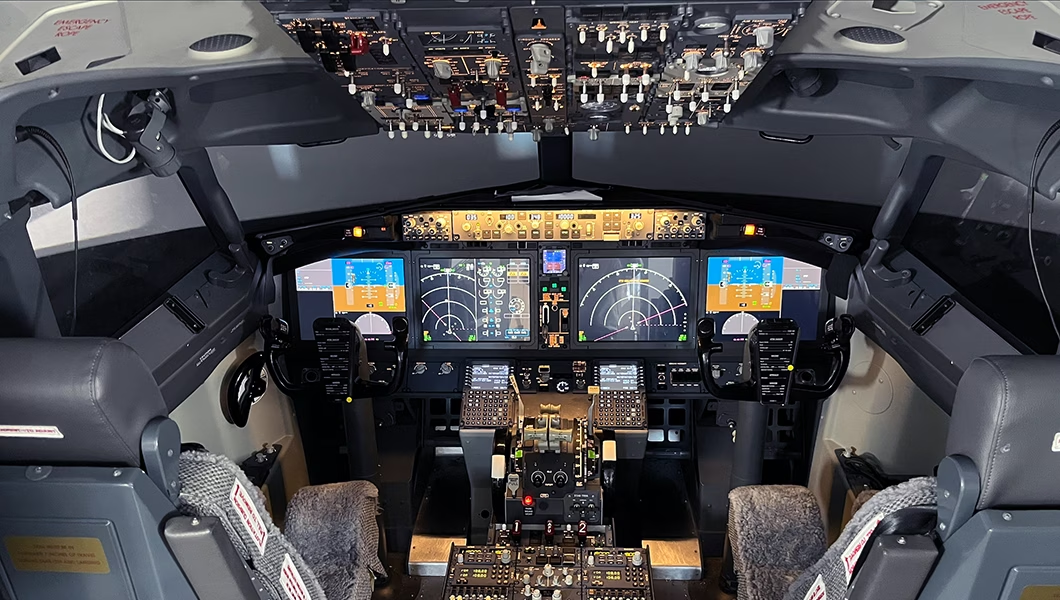
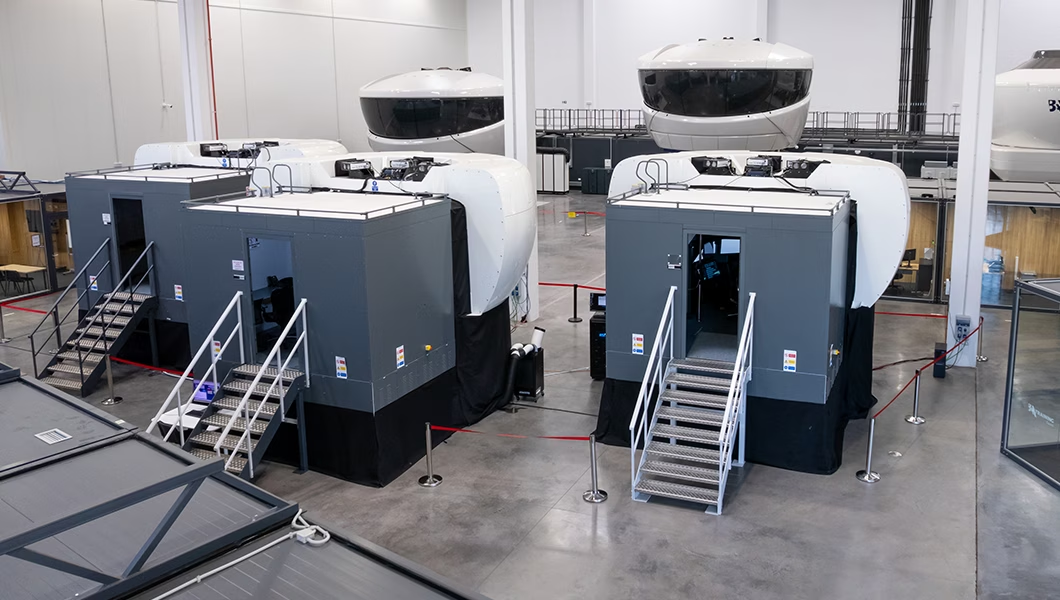
The B737 MAX APS MCC course is delivered at BAA Training Spain simulator center in Barcelona, on a B737 MAX Level 2 Flight Training Device (FTD) that offers advanced visual capabilities needed for the APS MCC qualification.
“APS MCC requires training on FNPT II (Flight and Navigation Procedures Trainer) or higher-level devices that are capable of replicating an airline-style environment,” explains Danielle Roos, Chief Theoretical Knowledge Instructor at BAA Training. “That means there’s an increased demand for device availability and high-fidelity operational scenarios. Instructors also need to have strong airline operational experience, among other competencies.
“Our infrastructure is already prepared for the B737 MAX type APS MCC – with higher-level devices in place and instructors ready for pilot training in Spain. We’ve already been offering the Airbus A320 type APS MCC courses, and have put in a lot of work to offer the same quality and standard training on the B737 MAX.”
The B737 MAX launch comes alongside a wider update to the APS MCC course across all types. Shaped by student feedback, the refreshed program now includes cumulative exercises, more interactive theory and revised manuals.
“We take student feedback seriously, because it’s one of the most reliable ways to keep improving our training quality,” adds Roos. “Our students are the ones who go through the course, so they see what works and what could work better. This update is a direct result of that.”
Subscribe to BAA Training
This year more of the leading European LCCs have highlighted the importance they place on advanced MCC training, and now it has become something unavoidable for new pilots, trying to enter commercial airline operations.
“The ability to fly an aircraft is only one part of becoming airline-ready,” says Roos. “The bigger transition is learning to operate effectively as a crew: applying Standard Operating Procedures (SOPs), sharing tasks, actively monitoring the flight path, managing workload and making sound decisions under pressure.
Danielle Roos, Chief Theoretical Knowledge Instructor at BAA Training
“Factors like operational standardization, reduction in Type Rating risk and costs, competency-based training alignment, and higher training output requirements affect LCCs on the regular, and they need to find ways to optimize all of this. Legacy carriers, on the other hand, historically have relied more on integrated cadet programs or internal training pipelines. Now, however, they are set on integrating APS MCC as well.”
While it’s the LCCs that are embracing APS MCC adoption more quickly, advanced training is increasingly becoming the benchmark in Europe for others to follow. This is accelerated by a couple of factors.
The environment right now is creating a need for APS MCC. Continued pilot demand and high training volumes, as well as the desire to reduce Type Rating failure rates. Additionally, as airlines adopt Competency-Based Training and Assessment (CBTA) and Evidence-Based Training (EBT) methodologies, they seek standardization benefits across their recruitment pipelines, which leads them towards APS MCC.
Rather than completing Multi-Crew Cooperation (MCC) and Jet Orientation Course (JOC) as separate modules, APS MCC integrates crew cooperation, jet orientation and airline operations within one structured, competency-based training and assessment framework.
Bringing the Boeing 737 MAX APS MCC course to the roster will offer a better readiness for the up-and-coming commercial pilots not only to gain airline-level training for the future work environment but also meet the requirements that are now appearing as a must-have qualification for entry-level First Officer positions.
Author: Karolina Zilenaite
With the background in journalistic writing, Karolina has years of content creation experience under her belt. Tackling all manner of topics across the aviation industry, she aims to bring interesting perspective and spark curiosity.
This website uses cookies. You can express your preference for cookies by selecting one of the options below. If you select the "Allow" option, you agree to the use of all types of cookies, including third party and marketing cookies. You can change your cookie settings or withdraw your consent at any time. Your consent is not required for the recording of the strictly necessary cookies. For more information, please read our
Cookie Policy.
Cookies settings
We use cookies and other similar technologies to help provide our Services, to advertise to you and to analyse how you use our Services and whether advertisements are being viewed. We also allow third parties to use tracking technologies for similar purposes. If you are using our Services via a browser you can restrict, block or remove cookies through your web browser settings.