BAA Training Signs with France's Société Générale for Pilot Training Financing
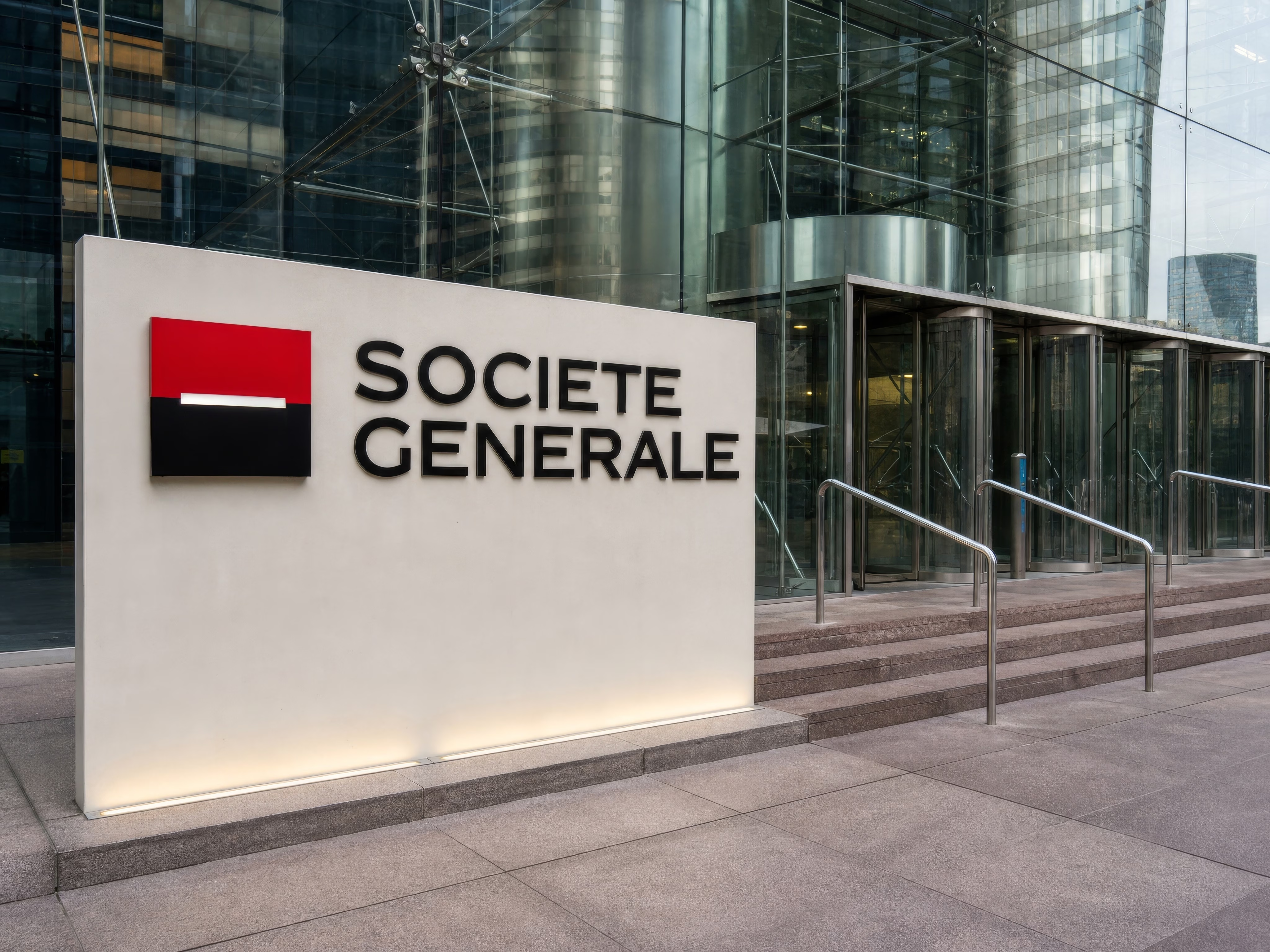
BAA Training France has signed a financing partnership with Société Générale, one of Europe's leading banking groups, giving French nationals a new way to fund their path into aviation.
The agreement comes at a moment when demand for new pilots in France – and Europe – continues to grow.
Boeing projects European carriers alone will need roughly 153,000 new pilots by 2045, or about 8,000 per year. Both legacy and low-cost carriers continue to run year-round cadet and direct-entry assessment days; however, with limited training capacity, this may not be enough.
France's own training landscape has consolidated around a small number of providers. Outside of a single state-funded program – a fiercely competitive route with only around 30 places a year – many aspiring pilots pursue privately funded integrated ATPL training, which requires investments from €110,000 and up.
For most candidates, without access to that kind of capital upfront, financing is the difference between training and not training at all. The high training costs also affect the quality of the candidate pool, limiting career opportunities for especially talented individuals who lack sufficient financial support.
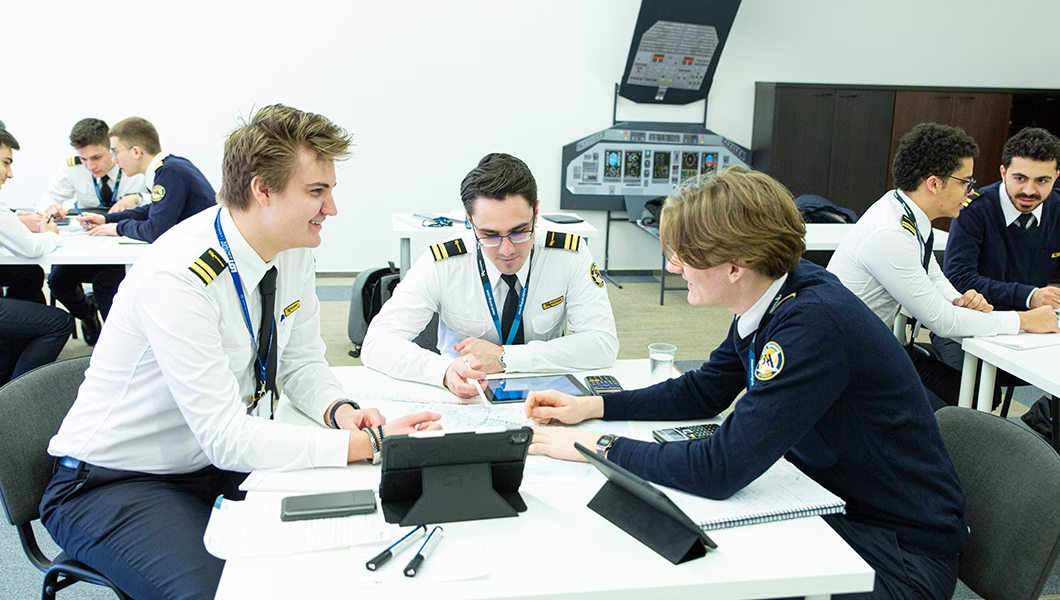
That's the gap BAA Training France and Société Générale are aiming to close. Under the agreement, students can apply for partial or full loans to cover training at BAA Training France, including ATPL Integrated, MPL (Multi-crew Pilot License), cadet programs, Type Rating, APS MCC certification, and cabin crew training.
Subscribe to BAA Training
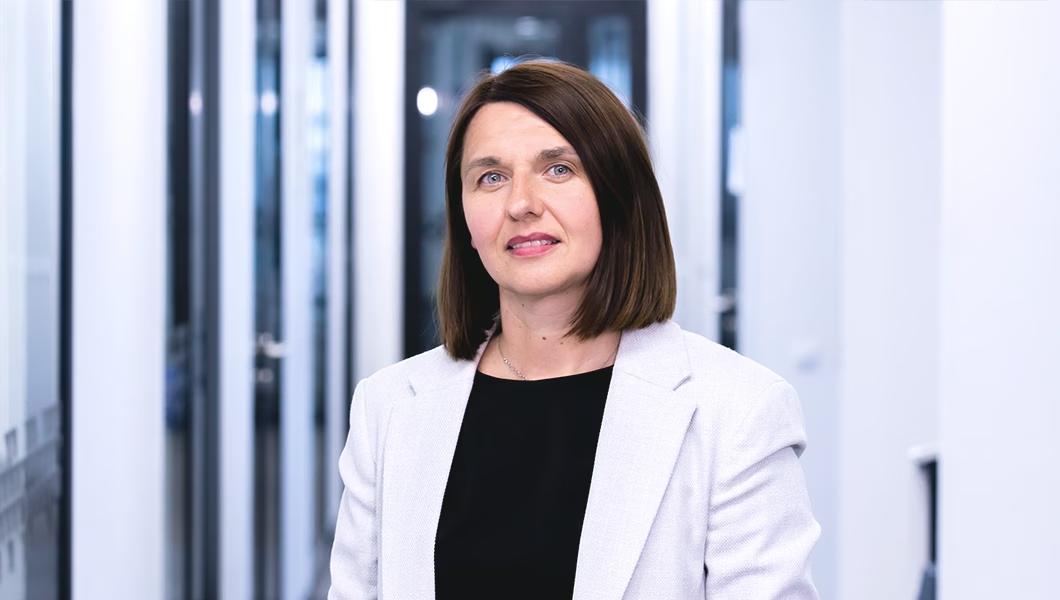
Lina Svedarauskaite, Service Operations Manager at BAA Training France
“It's an important step for us as an aviation training provider in France,” said Lina Svedarauskaite, Service Operations Manager at BAA Training France. “We're joining an already-compact list of aviation training institutions in the country that offer this kind of option through an official banking partner. Being able to provide a real financial solution through Société Générale is something we're very happy about.”
Becoming an eligible partner isn’t automatic. Société Générale puts prospective training providers through a rigorous audit and evaluation process before extending this kind of support.
The financing option arrives alongside a broader industry conversation about accessibility. As the pilot shortage keeps pressure on airlines to recruit faster, training capacity and affordability are increasingly seen as bottlenecks in their own right – not just in France, but across Europe. Partnerships like this one point to financing becoming a more standard part of how ATOs compete for students and how airlines ultimately fill their cockpits.
For BAA Training France, the partnership marks not just a new benefit for prospective students, but a bet that the training organizations able to solve the affordability question will be the ones that shape the next generation of French aviation talent.
Author: Karolina Zilenaite
With the background in journalistic writing, Karolina has years of content creation experience under her belt. Tackling all manner of topics across the aviation industry, she aims to bring interesting perspective and spark curiosity.
This website uses cookies. You can express your preference for cookies by selecting one of the options below. If you select the "Allow" option, you agree to the use of all types of cookies, including third party and marketing cookies. You can change your cookie settings or withdraw your consent at any time. Your consent is not required for the recording of the strictly necessary cookies. For more information, please read our
Cookie Policy.
Cookies settings
We use cookies and other similar technologies to help provide our Services, to advertise to you and to analyse how you use our Services and whether advertisements are being viewed. We also allow third parties to use tracking technologies for similar purposes. If you are using our Services via a browser you can restrict, block or remove cookies through your web browser settings.