The Simulator Gap Keeping EASA Renewals Out of Reach in Asia
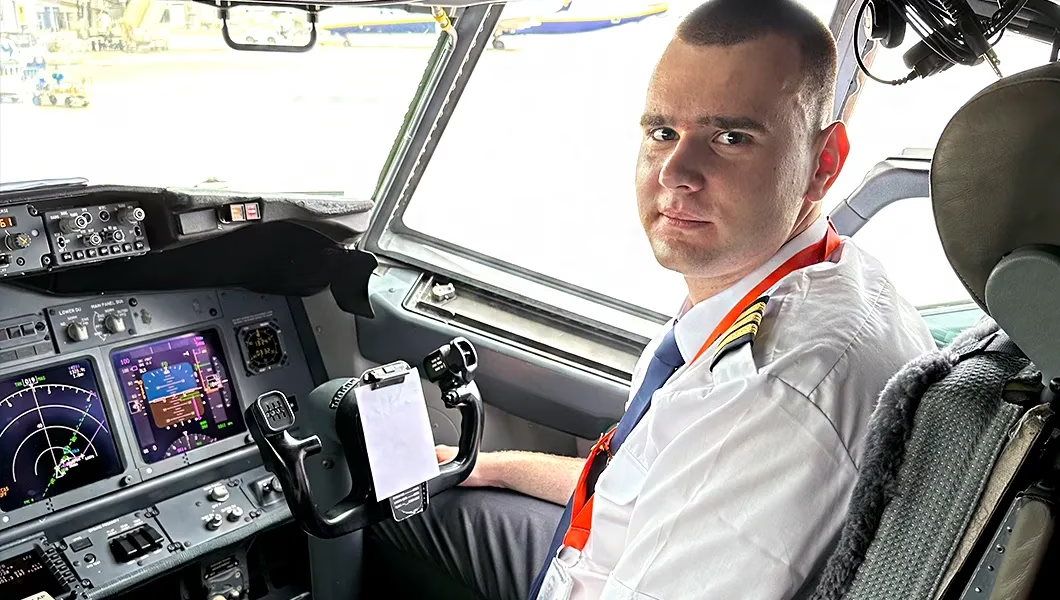
Pilots do not stop training once they start flying – recurrent training continues for their entire career. This is normal for the industry, but it creates a real problem for European pilots working at Southeast and East Asian carriers.
Content
In This Article
Why EASA license renewals are pushing European pilots in Asia to fly back to Europe – and what it's costing them
Only three countries in Southeast Asia currently have EASA-certified simulators and examiners for these renewals
The certification process is long and expensive, so don't expect quick fixes to this bottleneck
That includes international airlines operating in the region. The issue: their licenses are regulated by EASA (the European Union Aviation Safety Agency) and renewing them from Asia isn't as simple.
A Growing Pilot Shortage Meets a Renewal Bottleneck
Southeast Asia is one of the regions most exposed to the global pilot shortage. Airlines are growing their fleets and adding routes faster than training programs can keep up. Boeing latest estimates show that the industry will need 66,000 new pilots by 2045 – and that is pushing airlines to hire experienced pilots from outside the region, says Roberto Casarin, Deputy Head of Training at BAA Training Vietnam, who has tracked this trend for the past ten years.
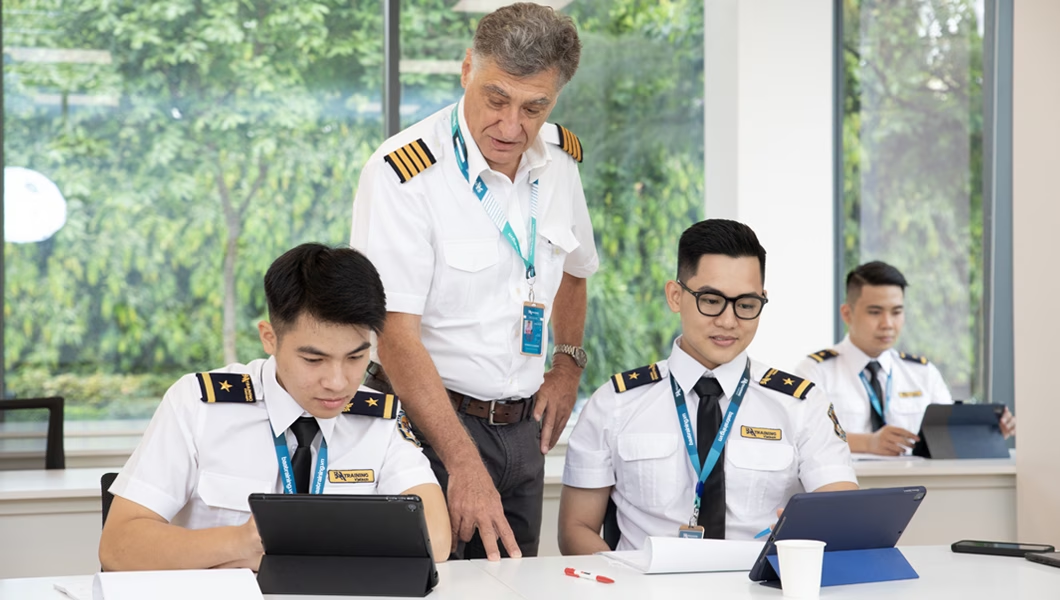
Roberto Casarin, Deputy Head of Training at BAA Training Vietnam
"There are plenty of European pilots flying for Asian carriers on their EASA-issued licenses right now. But the complication is this: when their qualification needs renewing, they currently have to fly back to Europe to do it. That costs money, and a lot more time than it should.
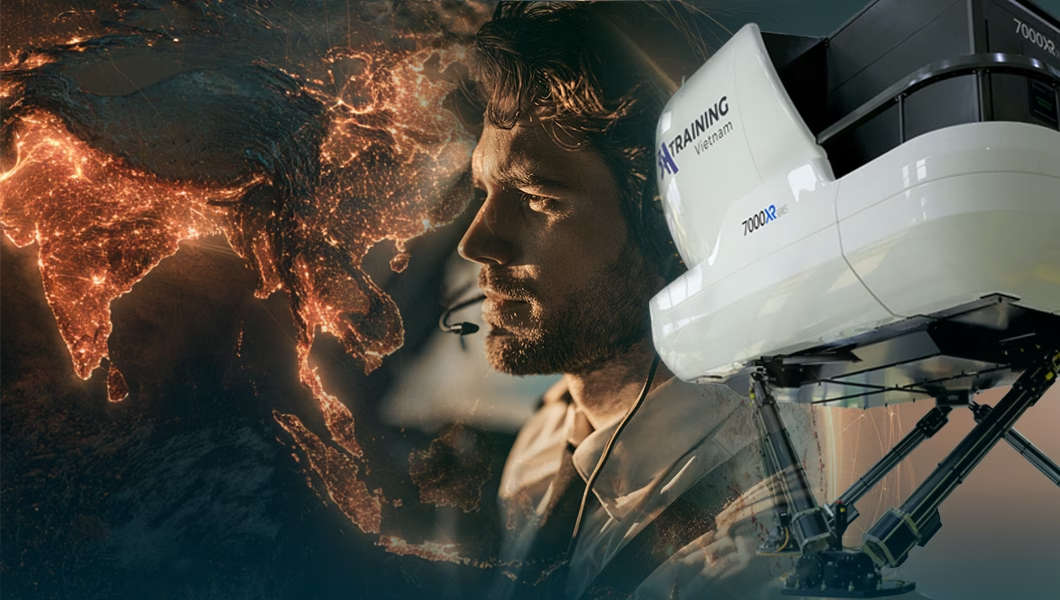
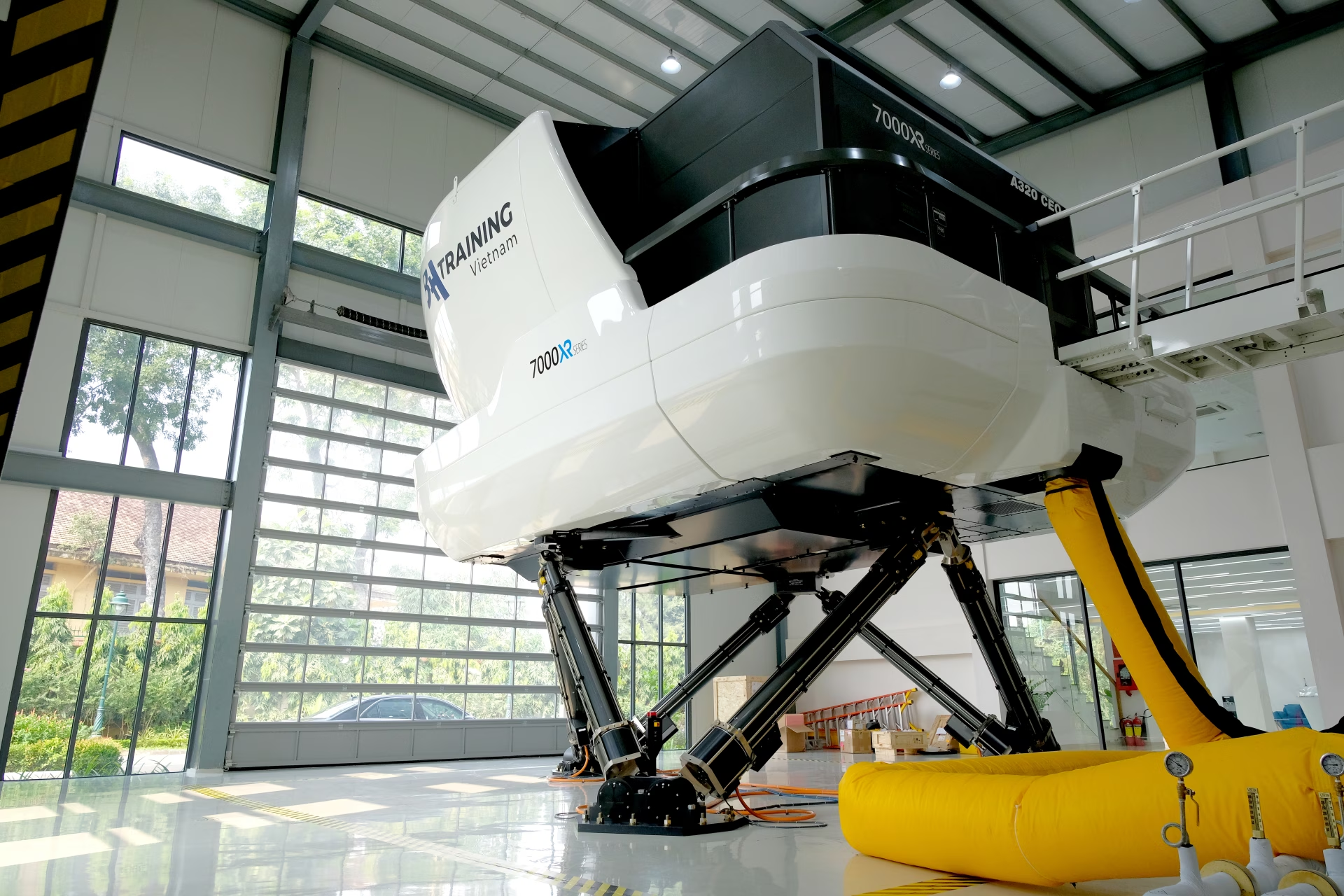
"On top of that, the region has very few EASA-approved full flight simulators, and few EASA-certified examiners who can carry out these renewals. In Vietnam, for example, we're the only independent training center with an EASA-certified Airbus A320 full flight simulator and EASA-certified examiners. The only other countries nearby with this capability are Thailand and Singapore."
A Region Split Between Regulatory Standards
There is another layer to this. Some aviation authorities – Taiwan and Hong Kong, for example – only recognize EASA-certified equipment and programs.
Subscribe to BAA Training
"We do get asked specifically whether our programs and devices are EASA-certified," Casarin notes. "Without that certification, some of these pilots simply wouldn't have been able to complete the training they needed. These enquiries and cases already set the tone pretty clearly for the region, so we are continuously investing into bringing EASA standards to Southeast Asia."
Part of the reason for this comes down to how fragmented aviation oversight is across the region. Each country's aviation authority decides independently which regulatory standard to follow, and many choose EASA to do so. It is seen as one of the most rigorous and well-developed systems. That choice then determines which training programs and simulator devices airlines in that country are required to use, Casarin notes.
EASA-certified Airbus A320neo full flight simulator at BAA Training Vietnam training center.
Local Training Centers Are Filling the Gap
In the short term, Casarin doesn’t expect to see new EASA-approved simulators appearing in the region. Getting certified is expensive, and that cost can be difficult to maintain for training centers tied to a single airline or with a limited number of clients.
"Getting EASA certification is expensive, strict, and slow – it typically takes six months to a year. And certifying a device outside an EASA-regulated country adds even more inspection. In a country like Vietnam, the process demands real thoroughness. It is not something just anyone can do, and it is not something that happens fast."
For European pilots based in Southeast Asia, flying home for every license renewal means losing time and money. Local EASA-certified training centers solve that problem – no long-haul travel required. For regional airlines that don't have the resources to build this capability in-house, independent training centers like this fill an important gap.
Author: Karolina Zilenaite
With the background in journalistic writing, Karolina has years of content creation experience under her belt. Tackling all manner of topics across the aviation industry, she aims to bring interesting perspective and spark curiosity.
This website uses cookies. You can express your preference for cookies by selecting one of the options below. If you select the "Allow" option, you agree to the use of all types of cookies, including third party and marketing cookies. You can change your cookie settings or withdraw your consent at any time. Your consent is not required for the recording of the strictly necessary cookies. For more information, please read our
Cookie Policy.
Cookies settings
We use cookies and other similar technologies to help provide our Services, to advertise to you and to analyse how you use our Services and whether advertisements are being viewed. We also allow third parties to use tracking technologies for similar purposes. If you are using our Services via a browser you can restrict, block or remove cookies through your web browser settings.