1. Fly your preferred aircraft within the license limits
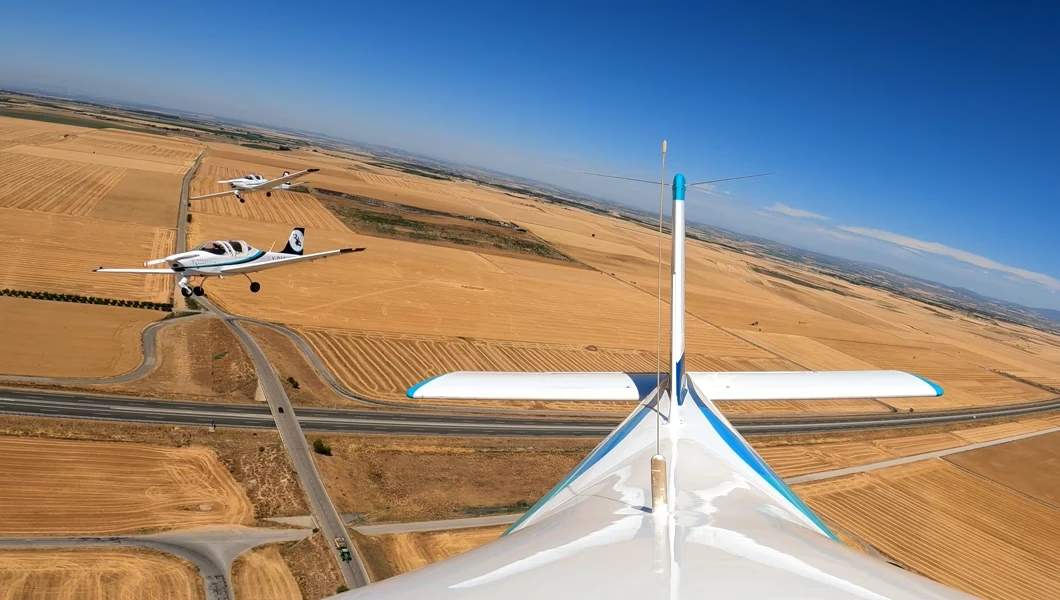
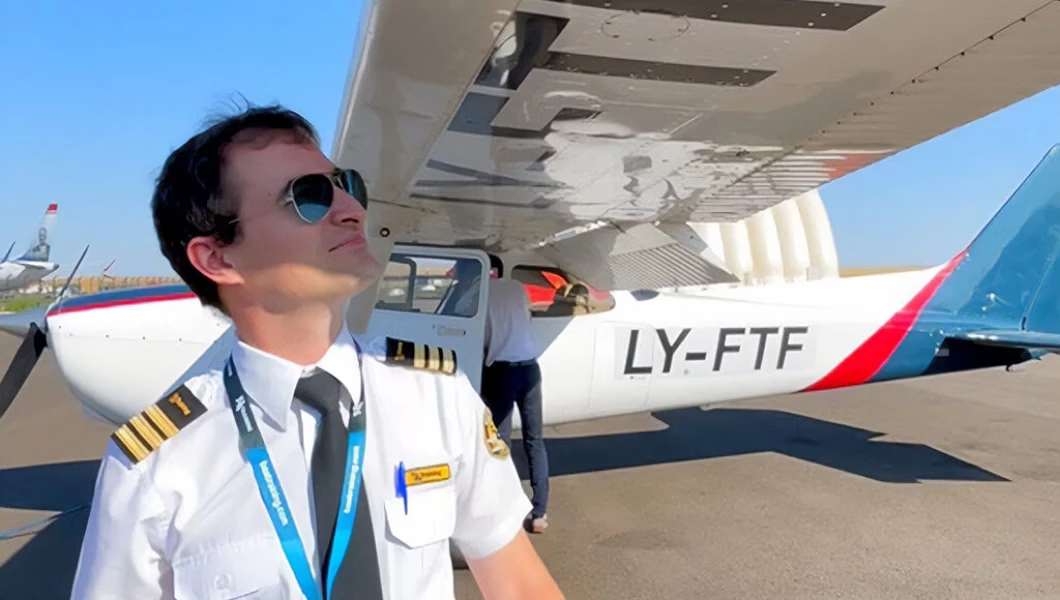
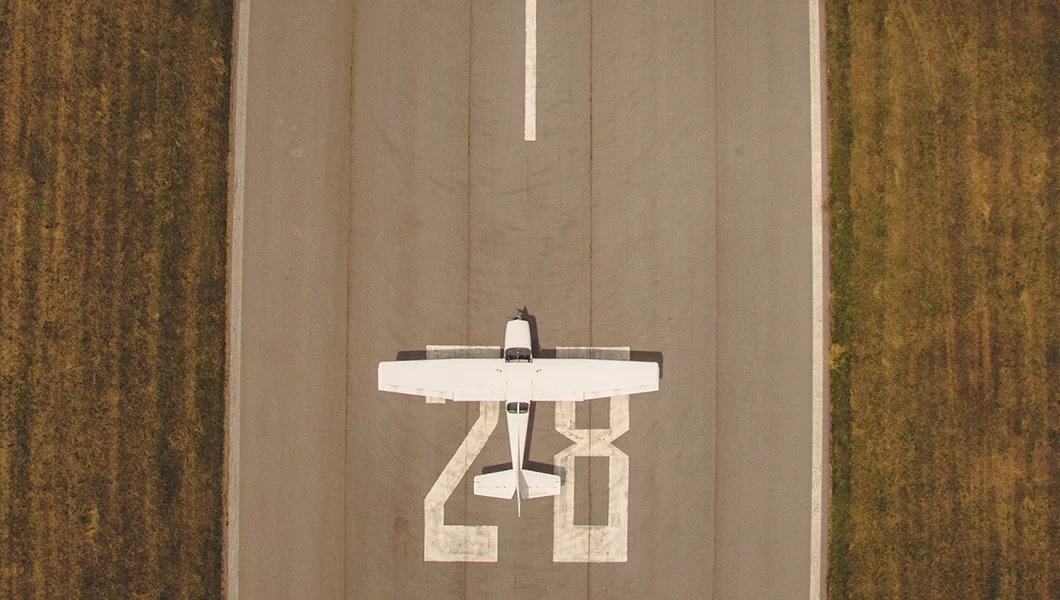
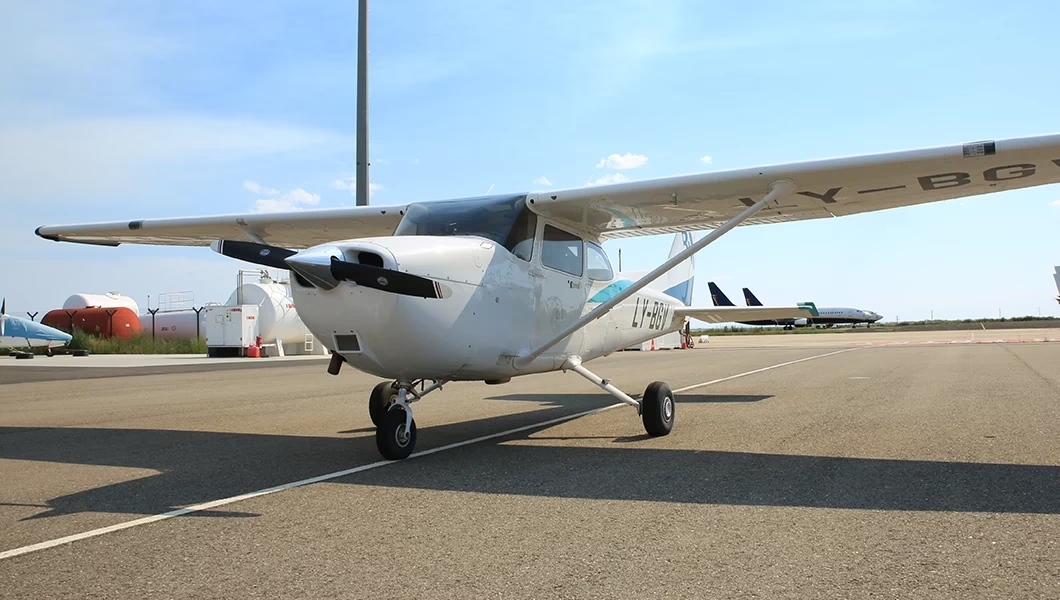
As an EASA PPL holder, you can fly a single-engine piston aircraft up to 5700kgs MTOW that does not require a Type Rating. For example, you can fly the extremely user-friendly Cessna 172 Skyhawk, commonly available for rent and purchase, or the Piper PA-28 Cherokee, appreciated for its robust construction and durability, among many others.
Not only does this type of air travel give you the incomparable feeling of freedom and motivate you to learn a new skill, but it also saves you a lot of your precious time (approximately twice as much as you would spend on the road)!
2. Carry passengers and share flight expenses
Naturally, the idea of flying an airplane might make you scratch your head, as this occupation is not the cheapest one. However, the good news is that, in line with EASA regulations, you can share direct flight costs with passengers. The opportunity can be seized using non-complex aircraft and carrying a maximum of five persons (six people on board, counting the pilot).
Joris Gintilas, Chief Compliance Officer at BAA Training, says, “Students often ask whether it’s legitimate to share costs with passengers. The answer is 100% yes, as both EASA and FAA gave the green light to this alternative a while ago. National aviation authorities might limit the endeavor to a certain extent, but in Lithuania, for instance, there’re no such limitations.”
2.1. Example of aircraft rental cost-sharing
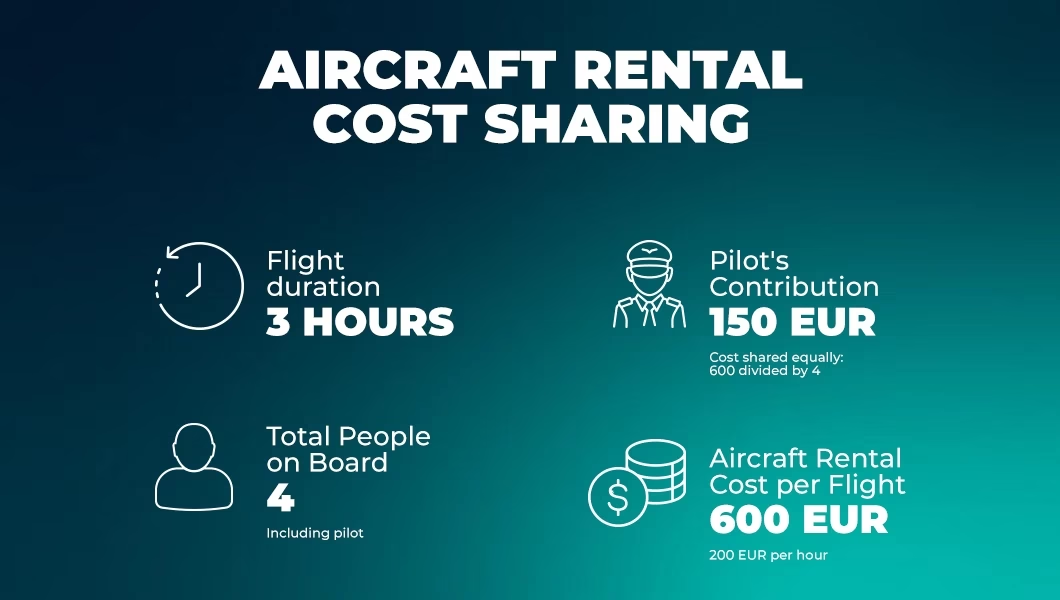
Also, remember that only fuel, aircraft rental fees, airfield charges, landing fees, and similar expenses can be shared. It does not apply to ‘annual’ maintenance and operating expenses. Nevertheless, that’s already quite some relief. Check the estimation example below to understand your saving potential better.
Suppose you are a pilot carrying three other people in a four-seat airplane. You receive a rent invoice which shows the flight took 3 hours of engine time at €200/h (the average price in Lithuania). Then, you would calculate the rent cost as 3x€200=€600. If you agree to spread the costs equally with your passengers, your expense is just €600/4=€150.
2.2. Look for companions on flight-sharing platforms
Now that you are familiar with the cost-sharing option, a question arises about where to look for those who would be willing to take the remaining seats. The second logical question is if it is safe to fly with them, considering they are total strangers. The answers could be found by browsing through various flight-sharing platforms, such as COAVMI, Wingly, Flyt.club, and Vuelea. These platforms aim to match private pilots with those who want to take a flight. So, every private pilot can go online and try to find some companions!
EASA issued a unique charter a decade ago listing the commitments imposed on flight-sharing platforms. For instance, they must raise awareness about a pilot’s code of conduct, provide guidance and tutorials on safety-related best practices, etc. All of the flight-sharing platforms mentioned above signed this charter.
3. Be an active pilot community member
We cannot emphasize enough the importance of belonging to an aviation community after completing your training. First and foremost, it opens up great opportunities for networking with like-minded individuals, and you never know what wonders these connections can lead you to in the long run!
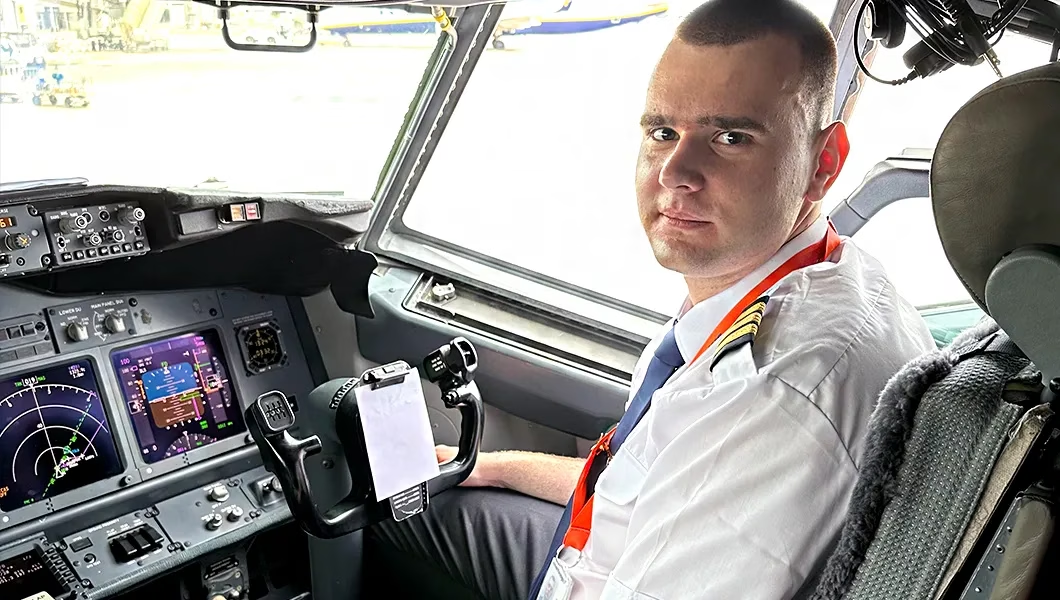
Let us share a real-life example of one of the youngest Boeing 737 Captains, Lithuanian Igoris Lobanovas. He achieved the rank of Boeing Captain at the age of just 24!
In his interview for the local podcast “Alex Show,” he admitted that his journey wasn’t initially smooth. He dropped out of university, and his passion for aviation led him to work as a mechanic’s assistant in an aeroclub. According to him, after he did his PPL flying lessons and obtained his private pilot certificate, the support he received from fellow community members, both mentally and in overcoming financial constraints, propelled him quickly up the career ladder. He told the interviewer, ‘I don’t know a single person who would not be a part of a community and achieve great results.’
Other gains private certificate holders can expect from the community are cost-sharing for flights and discounts on products and services. These range from pilot supplies, books, and study materials to additional training courses.
4. Fly to other countries
Utilizing your private pilots license, you can do a cross country flight and fly to international destinations. However, ensure you familiarize yourself with the rules and regulations governing your chosen destination before embarking on your journey. Completing your solo flight around the world without ever stepping foot on an airline is a next-level experience!
5. Participate in fly-ins, festivals, and fairs
Attending these events becomes more than a celebration of flight. It transforms into a shared passion for aviation, an opportunity to showcase your newfound flying skills, and a chance to immerse yourself in the vibrant community of aviators.
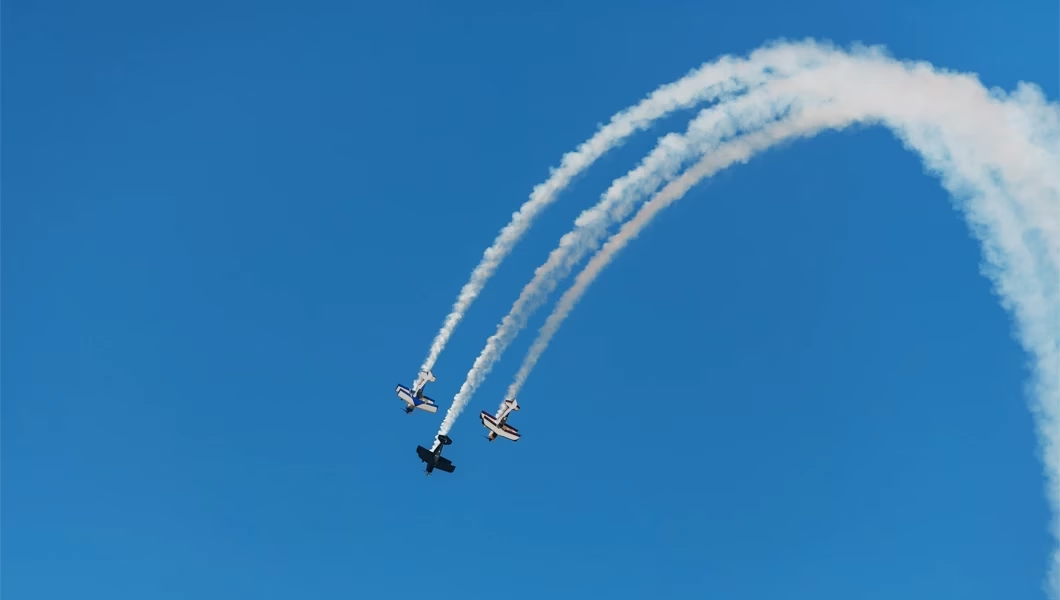
For example, last year, BAA Training was delighted to participate in the Lleida Air Challenge, the only aeronautical fair at Lleida-Alguaire International Airport that gathers approximately 80 exhibitors and attracts 5,000 visitors annually. The highlight was an incredible airshow, featuring various flight schools, flying clubs, and more, creating an atmosphere that had the audience cheering!
With a private pilot’s license, the doors to this and more events will be wide open for you!