Cristian Puig, Deputy Head of Training at BAA Training and Captain at a large European operator, explains the nature of these checks, how they impact airlines and pilots personally, and the next steps after the inspectors define any deviations from standards.
Defining the SAFA and SACA Inspections
The Safety Assessment of Foreign Aircraft (SAFA) program was launched in 1996 by the European Civil Aviation Conference (ECAC) to complement ICAO audits and enhance aviation safety. In 2012, The EU Ramp Inspection Programreplaced the original EU SAFA Program, encompassing two main components:
- SAFA ramp inspections – Targeting third-country operators (non-EU carriers) that comply with ICAO standards.
- SACA (Safety Assessment of Community Aircraft) ramp inspections – Aimed at community operators licensed by EASA participating states, inspected by other EASA participating states against EU Standards.
There is also a third type of inspection focused on domestic aircraft, known as SANA (Safety Assessment of National Aircraft). These inspections assess the safety and regulatory compliance of national airlines.
However, colloquially, any inspection mentioned above is often called a “SAFA inspection, “as the term has become a catch-all phrase.
Cristian says, “Ramp checks are possible in every country in the world, but they follow a more regulated and standardized structure in SAFA countries. Annually, 10-12k SAFA/SACA inspections are conducted. In contrast, the FAA conducts 5-7k. Additionally, the FAA generally oversees many millions more flights per year than EASA, which makes the comparison unbiased. This definitely helps Europe to stay at the forefront with its standards as the sheer volume of inspections allows for more consistent enforcement of safety regulations, quicker identification of potential issues, and a robust oversight mechanism. However, it is essential to highlight that the SAFA program is only one part of a broader safety ecosystem. “
Apart from the 27 EU countries participating in SAFA, Canada, Morocco, Singapore, the United Arab Emirates, the United Kingdom, and, more recently, Brazil—the only South American member—are also part of The EU Ramp Inspection Program, bringing the total number of participating countries to 51.
How Does the Inspection Take Place?
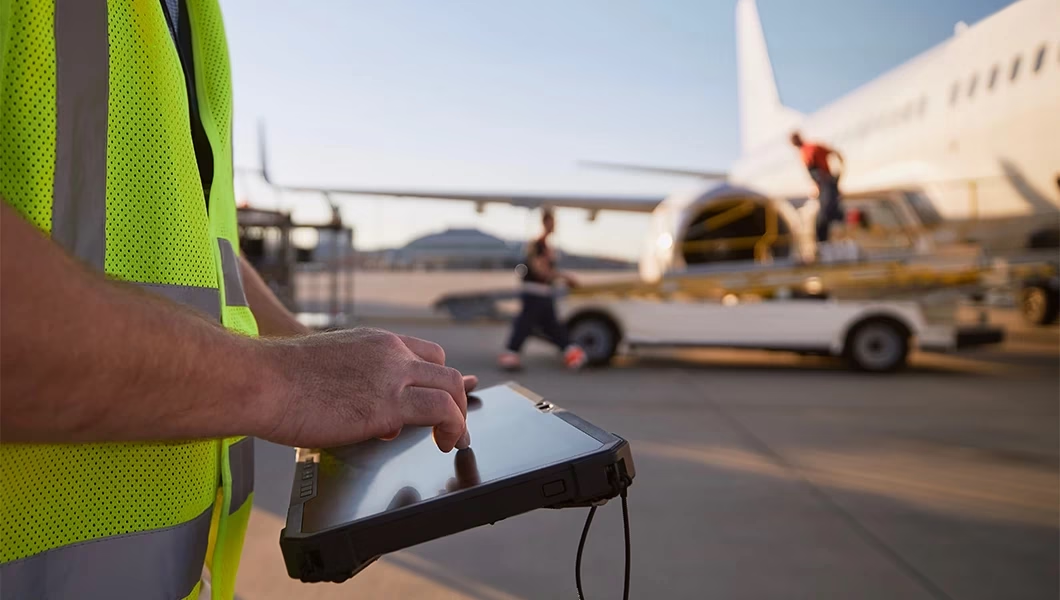
According to Cristian, these inspections, conducted by authorized inspectors, typically occur when the aircraft is on the ground. For example, when it is parked at the gate with the engines shut down and anti-collision lights off, during passenger boarding, or ground handling. Usually, two inspectors come and introduce themselves to the pilot-in-command before beginning a ramp inspection.
“They have 53 inspection items spread over five areas: flight deck, passenger cabin, aircraft status, cargo and general. Due to time constraints and the need to avoid delaying the flight unless serious non-compliances are detected, inspectors usually focus on the most critical safety aspects, such as the condition of emergency equipment, the functionality of safety systems, and the validity of crew licenses and documents. The average check takes about 30 minutes. “
Then, the findings are categorized as follows: “Category 1” finding is called minor; “Category 2” finding is significant, and “Category 3” is a major finding. The terms “minor”, “significant,” and “major” reflect the level of impact on safety.
A Category 1 minor finding typically leads to a debriefing of the pilot-in-command and the issuing of a Proof of Inspection (POI). A Category 2 finding results in written communication to aviation authorities. A Category 3 finding hinders the safety of aircraft operation. It may require corrective actions before the flight, restrictions on the aircraft’s operation, or even full grounding of the plane until the safety issue is resolved.
Cristian gives an example of an issue that initially might seem like a Category 1 concern but, in reality, often becomes a Category 3 concern and requires immediate action taken before the aircraft can take off: “You might find it surprising, but if any pilot leaves their belongings in the flight deck outside of the designated area, even if they are properly stowed, it is considered a risk to potential evacuation and is classified as a level 3 finding.“