Updated on Aug 31, 2026.
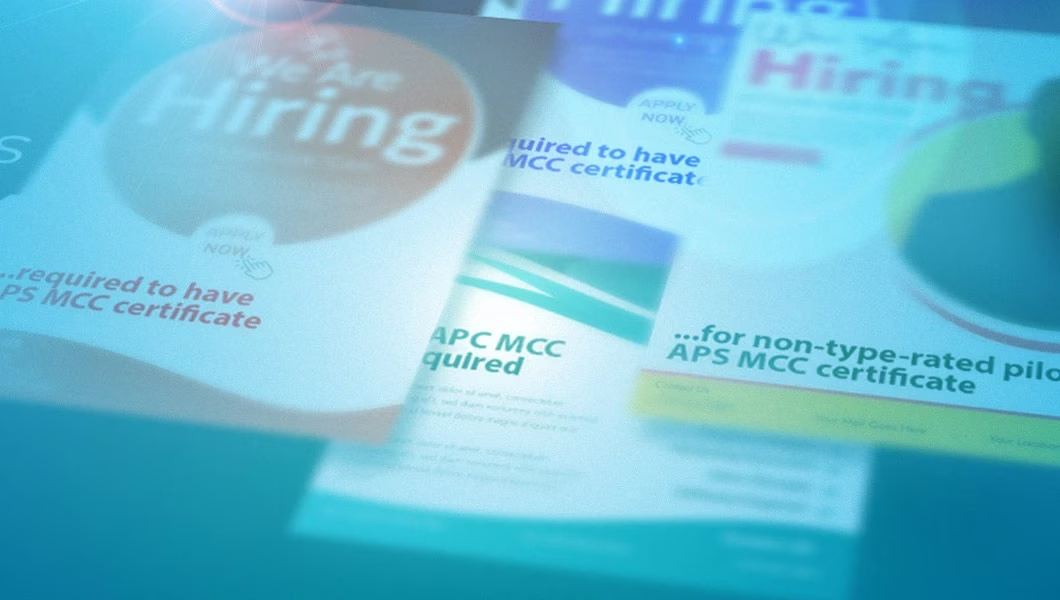
If you’ve been scouting job opportunities to join an airline as a First Officer in the last few months at least, you might’ve noticed that more European carriers like Ryanair, Wizz Air, Air France, or Swiss Airlines are now requiring you to have an APS MCC certification along with your CPL (Commercial Pilot License). What was an additional way to stand out in airline assessments some time ago has slowly become a standard for new pilots. Let’s take a closer look at the APS MCC course.
What Is an APS MCC?
APS MCC – or Airline Pilot Standard Multi-Crew Cooperation – is an enhanced version of the MCC (Multi-Crew Cooperation) course. Both are an introduction, a foundation to airline operations and multi-crew cooperation, with APS MCC being the enhanced version of the two.
The idea is to prepare students for the final assessment and act as an introduction before Type Rating training. Essentially, it enhances their pilot competencies and knowledge of airline pilot standards.
Why Is It Required?
A growing number of airlines require applicants to have this certification because this preparation aligns directly with airline-specific procedures, reducing onboarding time while boosting safety and efficiency. While the course is not tied to any specific airline, the skills and scenarios covered are widely applicable across airline operations.
Reasons airlines value APS MCC:
- Operational readiness. APS MCC places pilots in airline-style scenarios using jet simulators such as the Airbus A320 or Boeing 737. Training focuses on automation use, crew resource management (CRM), and high-workload situations similar to everyday line flying. This helps reduce gaps that would otherwise need to be covered during Type Rating training.
- Safety and competency focus. The course includes structured assessments based on EASA competencies. It looks at leadership, decision-making, and threat and error management, helping pilots develop the skills airlines expect in a multi-crew cockpit.
- Airline hiring advantage. APS MCC signals that a pilot is better prepared for airline operations. For airlines, this means smoother onboarding, more consistent training standards, and an easier transition from training to line flying.
APS MCC is essentially the next step after MCC, taking the basic multi-crew skills to an airline-ready level. To understand exactly what that means, let’s compare APS MCC with the standard MCC course.
Differences Between MCC and APS MCC
Both courses focus on teamwork and communication. Both focus on procedures in a simulator environment, performed on an FSTD (Flight Simulator Training Device).
But if the two are essentially the same – aim to prepare for multi-crew operations in commercial aviation – then what is the difference? Well, to put it in very simple terms, MCC teaches you how to work as a crew, while the APS course teaches you how to work as a crew in an airline-style environment. Foundations are the same, but it’s a very different level of ambition.
| Skills & Topics Covered | MCC | APS MCC |
|---|---|---|
| Multi-crew cooperation fundamentals | + | + |
| Crew communication & CRM skills | + | + |
| Pilot Flying & Pilot Monitoring role practice | + | + |
| Leadership & interpersonal skill development | + | + |
| Non-technical skills | + | + |
| Scenario-based training | + | + |
| Airline-style operational scenarios | – | + |
| Airline-style operating environment | – | + |
| Transition from single-pilot to multi-pilot operations | – | + |
| Jet aircraft handling principles | – | + |
| Advanced jet flight training | – | + |
| Preparation for initial Type Rating | – | + |
| Designed for airline career entry | – | + |
| Has a final Pass/Fail check | – | + |
TL;DR: MCC is the foundation course, answering the question of whether you can function effectively in a multi-crew cockpit. APS MCC goes a step further – it’s the bridge to airline operations, preparing you to start Type Rating training with confidence, not panic.
What Does APS MCC Cover
Like any other training, the course has a theoretical (self-study and in-class) part and practical training. During the ground school phase, the course covers technical topics like flight management and FMS (Flight Management System) use, monitoring and cross-checking, task sharing, as well as normal, abnormal and emergency operations. Soft skills like situational awareness, decision-making, leadership and crew management are also covered in detail.
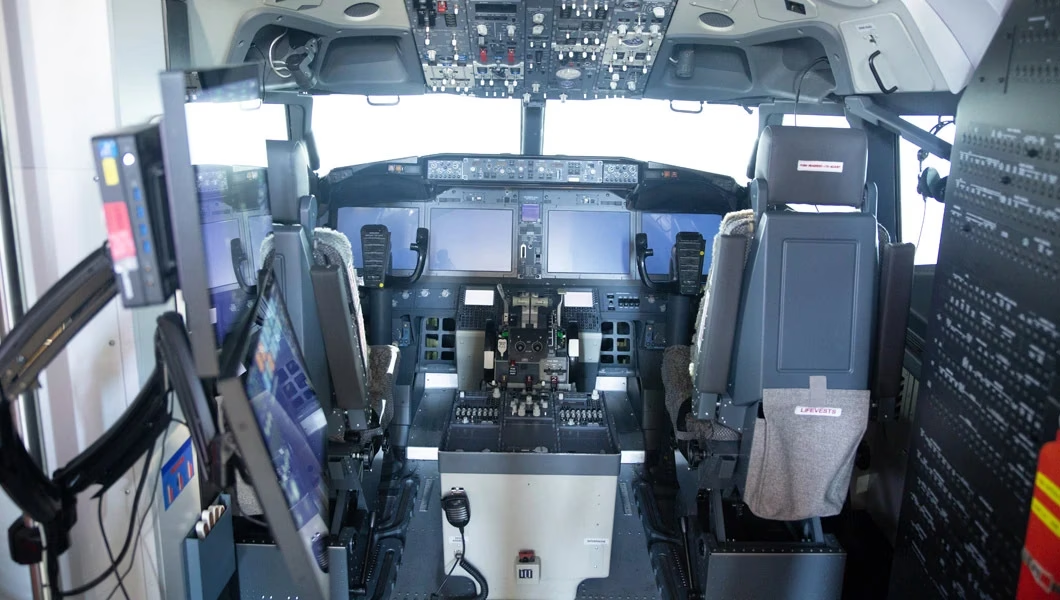
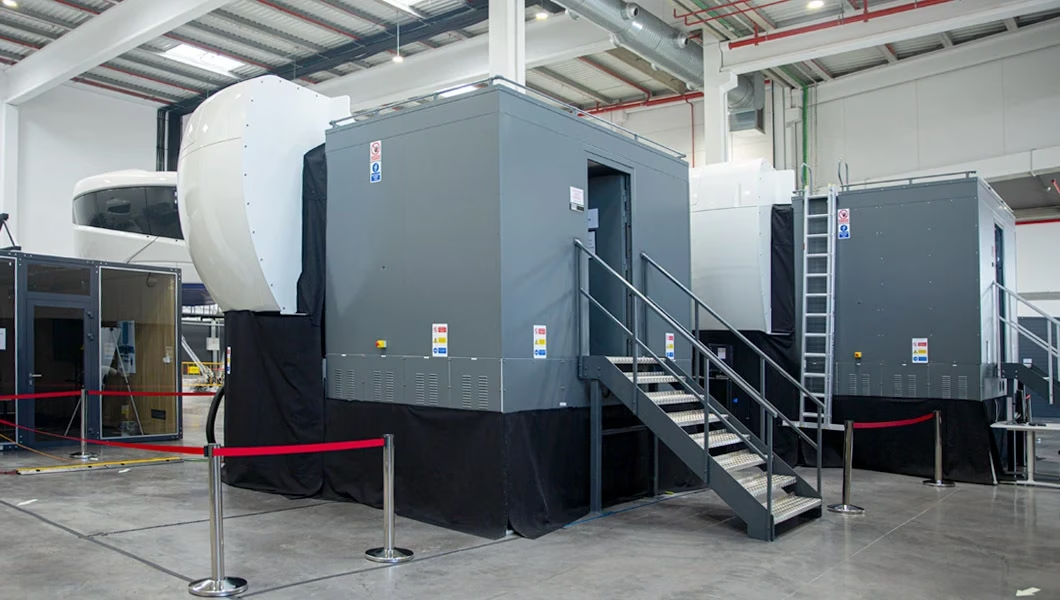
For practical training, students usually spend time in type-specific full flight simulators, fixed-base simulators (FBS) or flight training devices (FTD), working on skills like conducting cockpit preparation and briefings, applying combinations of thrust and attitude that ensure a stable and safe flight, managing a much wider range of speed and thrust, practicing upset prevention, and many other skills required to operate a commercial airliner.
It’s important to note that while aviation organizations like EASA give indications for the course syllabus, it can slightly vary according to each training provider.
How Long Is the APS MCC Course
A stand-alone APS MCC training takes around 20 days to complete – that’s about 81 hours in total.
When can you complete the course
The APS MCC course is designed for pilots who already hold a Commercial Pilot License. You can complete it in one of two ways:
- Alongside your initial pilot training, for example, as part of an ATPL Integrated program or an MPL course.
- After modular training, if you’ve already earned your CPL separately, APS MCC becomes an additional certification you’ll need before moving on to jet operations or Type Rating training.
This way, you get the multi-crew skills at the right point in your career, either integrated into your training path or as a step on top of your CPL.