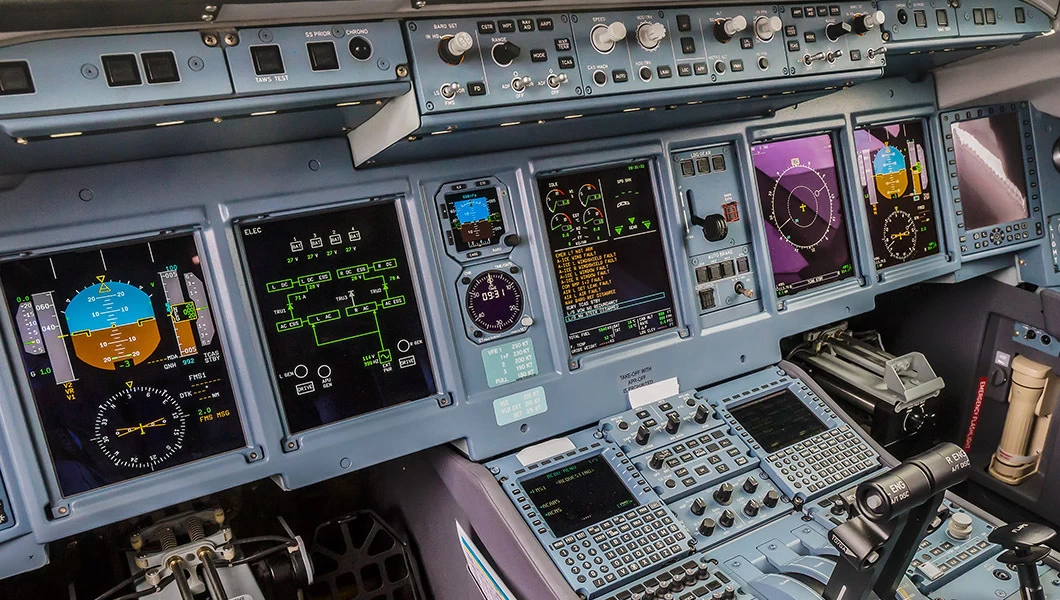
The next steps in your pilot career journey as a CPL holder, and in the aviation industry, are crucial, so the decisions you make have to be well-informed.
Prefer to listen? Press play to hear this article.
We’ve compiled a comprehensive article about all things CPL holders should know – from understanding what a Type Rating is to tips and tricks on how to stay healthy as a pilot. We’re constantly updating the information, so keep coming back to this article to find the latest CPL holder-focused articles from us.
Let’s get started!
Path After Commercial Pilot Licence
While the Commercial Pilot Licence (or “frozen” ATPL – Airline Transport Pilot License) suggests that you can do commercial flights, it’s true to a certain extent. For most, becoming a commercialairline pilot is the end goal – we’re talking sitting at the controls of Airbus A320s and Boeing 737s.
If that’s something you plan to do then do check out our interview with a First Officer and his day in a life of an airline pilot. Apart from the day-to-day responsibilities and schedule there are two more factors to consider: hours commercial pilots fly (things like rest periods, flight time, roster patterns, and more), and the salary they earn. All of this will give you a pretty good picture of what your future career can look like.
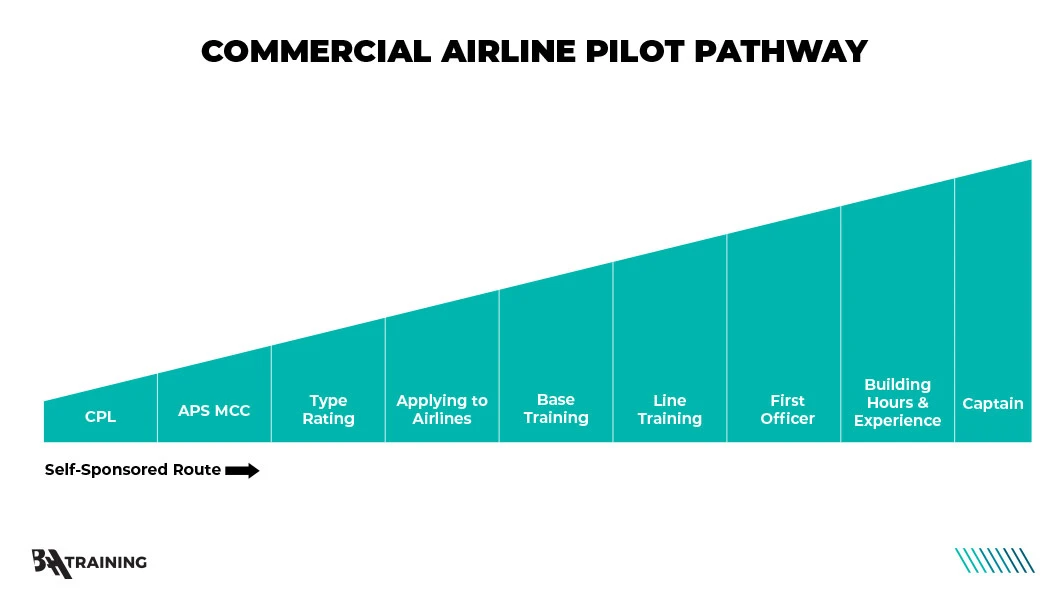
Naturally, you start off as a First Officer, working your way up to captaincy; these are the main pilot ranks to know if you’re joining an airline. And in order to achieve this, the next logical step is to get type-rated. But what does it mean exactly, and is there anything else that a future commercial pilot might need?
Let’s start at the beginning.
Type Rating for Work at Airlines
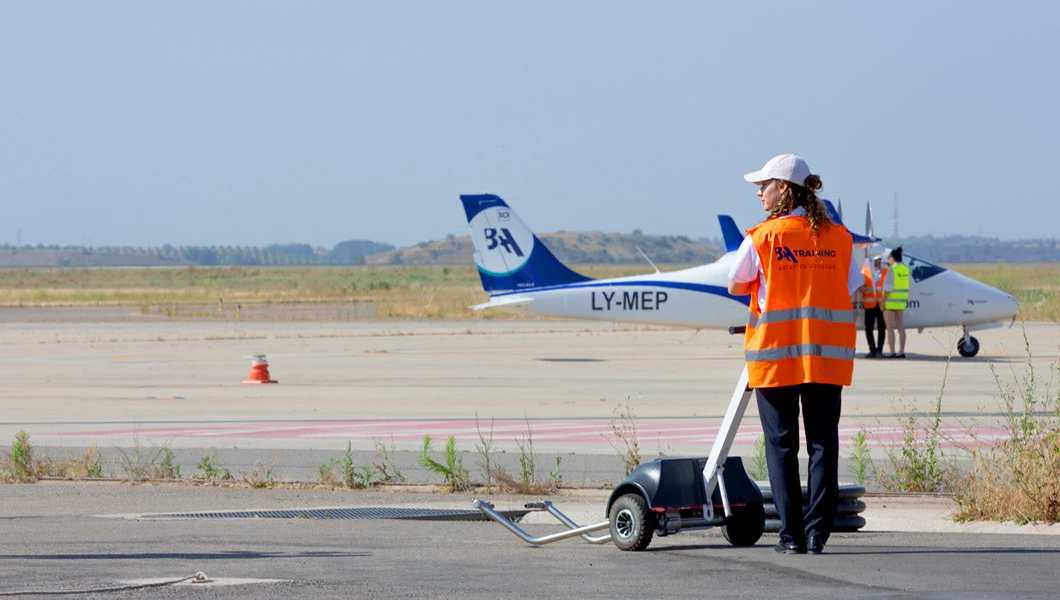
Type Rating is a non-negotiable when it comes to continuing the path of a commercial pilot. Up to this point, you’ve done your initial pilot training, and you’re able to fly aircraft that are considered general aviation (GA) or light aircraft, like a Cessna 172S or Tecnam P2006T. You’re a CPL holder. This means that you would be able to fly your friends to Annecy, France, for a ski trip, or offer sightseeing flights – if your skills, experience, and confidence allow that – and charge for it.
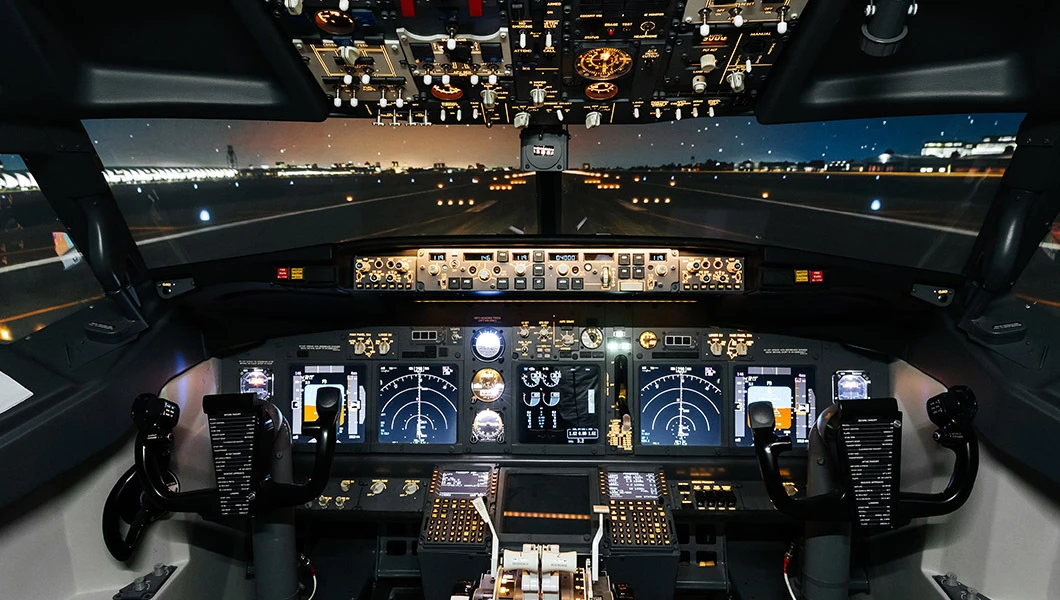
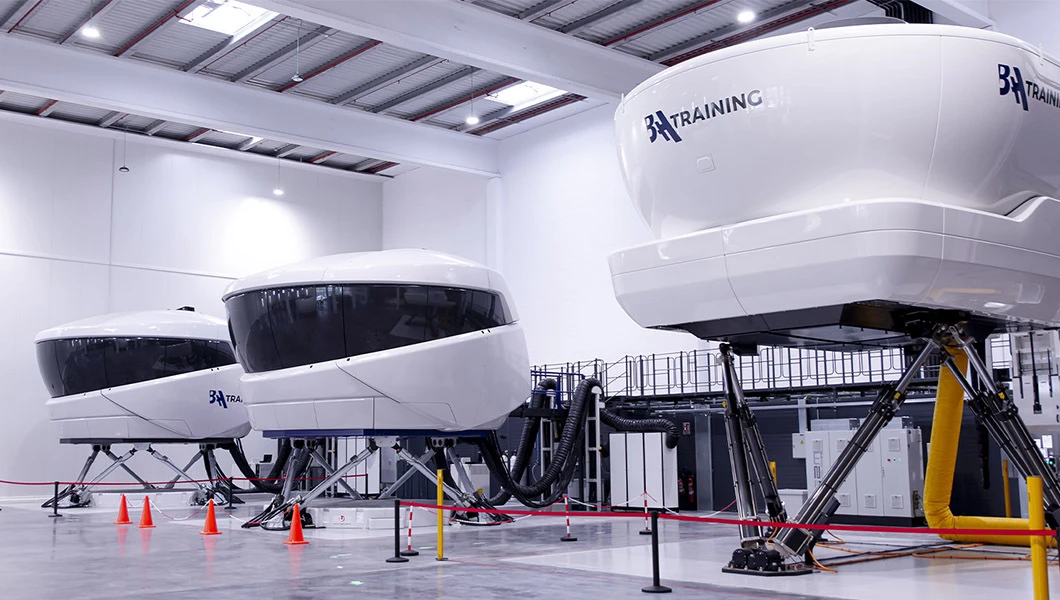
But, if you want to sit at the controls of the commercial aviation staples like Airbuses and Boeings, then it’s not nearly enough. It’s simply not possible to become a First Officer at an airline without a Type Rating. You need to master Standard Operating Procedures (SOPs) – including emergency procedures – and other airline aviation-focused trainings in full flight simulator sessions. You can read more about what a Type Rating is – head on to our dedicated blog post here.
Once you understand what Type Rating training brings to the table for your pilot career opportunities, the next thing is to figure out which aircraft type you want to master. The classic decision is between the A320 and the B737 if you’re not considering flying private aircraft. You can read more about choosing the Type Rating program here, and look through the most frequently asked questions about Type Rating here as well.
APS MCC Bridging CPL and Type Rating
Something worth considering when getting on the Type Rating journey is knowing what can get you employed at an airline faster or more easily. One is the APS MCC course. While not (yet) a mandatory requirement, some of Europe’s biggest low-cost carriers (LCCs) like Wizz Air and Ryanair, and major airlines like Air France, for example, express the preference for the candidate to have APS MCC and Type Rating completed.
Essentially, APS MCC enhances your pilot competencies and knowledge of airline pilot standards, which prepares you much better not only for the Type Rating training program, but also for real-life airline operations. We talk more about this in our blog post how APS MCC is becoming a new standard.
Type Rating Experience
With some of the basics covered, naturally, you start digging a bit deeper into the ins and outs of the actual training program itself.
The Type Rating training usually doesn’t differ too much – the aviation industry is a tightly-regulated one, so no matter which Type Rating you choose and where, the overall course will be more or less the same. What does matter is the center’s training quality, owned devices, locations, and instructor experience – the training facilities where you’ll be getting your training.
We have a comprehensive training breakdown for each of our Type Rating programs, which you can take a look at here. It will give you a good understanding of what to expect in terms of the curriculum and timeline.
Want to dive a bit deeper into Type Rating topics? Here’s what we’ve covered so far:
Importance of CRM in Aviation Industry – we explain why the communication skill (one of the core pilot competencies) is one of the most important ones to master.
There are a few other things to keep in mind, as some of these questions come knocking once you start your advanced training. The first one touches on time logging – what qualifies as flight hours and what doesn’t. The other one is proficiency checks. While they don’t come into play a bit later in your career as an airline pilot, it’s still good to know and understand what’s ahead.
Physical Fitness and Mental Health
Once they start flying commercially, a professional pilot needs to take care of his physical and mental wellness. It’s a rewarding career, but a challenging one as well, so keeping yourself fit on both fronts is really important.
Irregular schedules, long duty days, time zone changes, and the responsibility that comes with the job can all take a toll if you’re not proactive about it. The good news is that with the right habits and awareness, both are very manageable.
On the physical side, maintaining your medical fitness throughout your career is essential – and it goes beyond just passing the routine medical checks. We cover the key habits and routines to help you stay on top of it in our dedicated guide on how to stay physically fit as a pilot. And when it comes to mental health, the psychological demands of the profession are just as real. From managing fatigue and stress to building long-term resilience, we break it all down in our guide on how to stay mentally fit as a pilot.
Bottom Line
A Commercial Pilot Licence is a major milestone, but it’s really just the starting point of your commercial aviation career. From choosing and completing a Type Rating to understanding airline operations, building flight hours, and looking after your health – there’s a lot to navigate. The decisions you make early on can shape the trajectory of your career significantly, so it pays to be well-informed at every step.
We’ll keep adding to this article as we publish new content, so bookmark it and check back regularly!
But with more European carriers, such as Wizz Air, Ryanair, and easyJet, making it a requirement for their pilot recruitment, the landscape for new pilots gunning for First Officer roles has now started to change, says Danielle Roos, Chief Theoretical Knowledge Instructor at BAA Training, one of the leading global aviation training organizations delivering both Ab Initio and Type Rating training.
APS MCC as a new standard
Adoption of APS MCC accelerated significantly between 2021 and 2024, when the previously mentioned European low-cost carriers (LCCs) began specifying APS MCC as a preferred or required qualification in recruitment. This reflected airlines’ growing focus on recruiting pilots who are already familiar with airline-style operational environments. According to Roos, it can lead to improved Type Rating success rates, reduced training adaptation time, and enhanced overall training efficiency.
Danielle Roos, Chief Theoretical Knowledge Instructor at BAA Training.
“While the standard preparation for airline-bound pilots – the combination of Multi-Crew Cooperation (MCC) and Jet Orientation Course (JOC) – provided important foundational skills, it was typically delivered in a generic training environment that didn’t fully replicate airline-style operations,” she highlights. “The MCC and JOC were conducted as separate modules, and training scenarios weren’t always structured around realistic airline operational workflows, Standard Operating Procedure (SOP) integration, or line-oriented flight scenarios. APS MCC represents an evolution of this model.”
The APS MCC integrates and expands both MCC and JOC elements into a single, airline-oriented framework, placing greater emphasis on airline-style SOPs and competency-based training, aligned with modern airline methodologies like Competency-Based Training and Assessment (CBTA) and Evidence-Based Training (EBT), among other key areas.
“It’s been proven that such an integrated approach better prepares pilots for the operational and procedural demands of the modern airline environments,” notes Roos.
LCCs seen as the early-adopters
Why was it that the LCCs were the early adopters of APS MCC rather than legacy carriers? According to Roos, low-cost carriers are structurally incentivized to optimize training efficiency and reduce operational risk during pilot induction.
“Factors like operational standardization, reduction in Type Rating risk and costs, competency-based training alignment, and higher training output requirements affect LCCs on the regular, and they need to find ways to optimize all of this. Legacy carriers, on the other hand, historically have relied more on integrated cadet programs or internal training pipelines. Now, however, they are set on integrating APS MCC as well.”
While it’s the LCCs that are embracing APS MCC adoption more quickly, the advanced training is increasingly becoming the benchmark in Europe for others to follow. This is accelerated by a couple of factors.
The environment right now is creating a need for APS MCC. Continued pilot demand and high training volumes, as well as the desire to reduce Type Rating failure rates. Additionally, as airlines adopt CBTA and EBT training methodologies, they seek standardization benefits across their recruitment pipelines, which leads them towards APS MCC.
Implementing APS MCC more quickly
There are, however, some factors that might slow adoption. Among smaller airlines with lower recruitment volumes and airlines that rely primarily on internal cadet programs, Roos draws particular attention to the training capacity limitations. The biggest hurdle is ensuring the simulator and instructors are available.
“APS MCC requires training on FNPT II (Flight and Navigation Procedures Trainer) or higher-level devices that are capable of replicating an airline-style environment. That means there’s an increased demand for simulator availability and high-fidelity operational scenarios. Instructors also need to have strong airline operational experience, among other competencies, so instructor standardization becomes critical to maintaining course quality.
“This is where pilot training academies, like BAA Training, for example, come in. With sound training device infrastructure and qualified, experienced instructors in place, we have already adapted to overcome these challenges and meet the standards.”
APS MCC as a competitive differentiator
As APS MCC continues to gain traction across Europe’s aviation landscape, the question is no longer whether it will become standard, but how quickly the transition will be completed, and whether other regions will follow Europe’s lead.
What began as an LCC-driven efficiency initiative has evolved into a recalibration of First Officer preparation standards. The shift signals a broader industry recognition that bridging the gap between flight school and airline operations requires more than foundational skills; it demands realistic exposure to the operational rhythms and decision-making frameworks pilots will encounter from day one. For airlines and training organizations alike, the infrastructure and expertise required to deliver APS MCC effectively will increasingly separate industry leaders from those struggling to keep pace with modern operational demands.
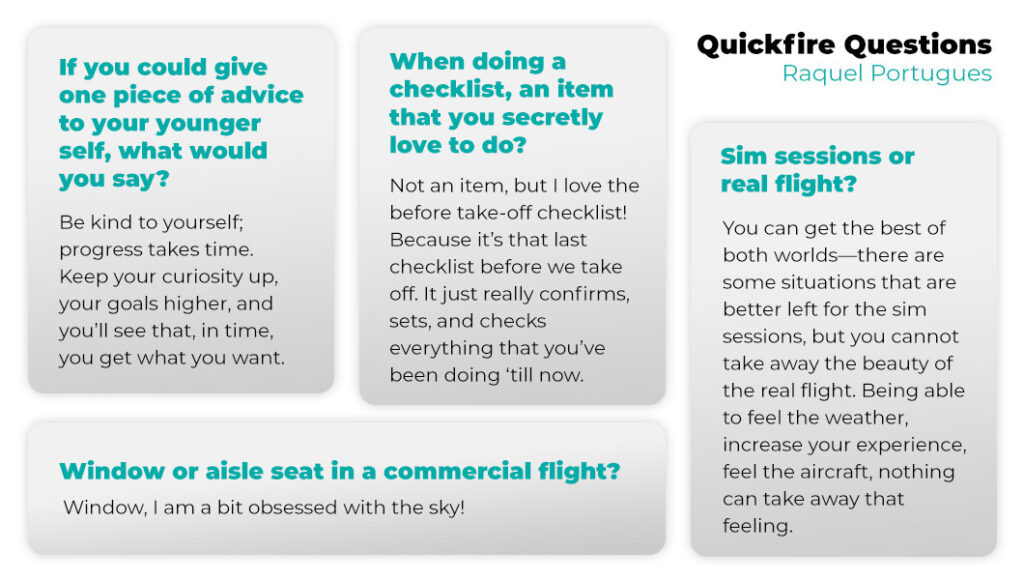
Our Flight Instructor (FI) Raquel Portugues’ story is one of the latter, shaped by proximity, patience, and an unwavering sense of belonging that would eventually lead her to BAA Training’s cockpits.
When the Sky Becomes Home
High school brought the pressure of choosing a path forward, and with it, the kind of uncertainty that many teenagers face. But living near an airport gave Raquel something most don’t have: a daily reminder written across the sky. While other students struggled with university brochures and career aptitude tests, she was looking up.
“I was living near an airport, so a lot of times I was looking up in the sky, with this kind of certainty. I kept seeing the planes all around, and it made me feel a sense of belonging. And it just clicked for me. And I just thought – I want to be a pilot.”
That moment was decisive. Raquel enrolled in a flight school immediately after graduation, starting flying small aircraft. No hesitation, just the beginning of what would become a career in aviation. Some people spend years searching for their calling. Hers flew overhead every day.
From Student to Role Model
A few years into her flying journey, Raquel began to see her career from a different altitude. The student pilot who once meticulously prepared for her first solo flight, now had something valuable to pass on. But the decision to become an instructor wasn’t driven by a desire to move up a ladder. It was about remembering who helped her climb it in the first place.
Raquel’s own instructors had shaped not just her skills, but her entire approach to aviation. They were the ones who turned anxiety into confidence, confusion into clarity. Now, she wanted to be that person for someone else.
“I would always think, when I was still at the flight school, how well my instructors guided me, and that actually inspired me to become a role model to others. And I feel that instructors are those who set strong foundations for today’s pilots.”
But instructing also offered something she didn’t expect – to keep learning. The young pilots Raquel now trains ask questions that make her reconsider things she thought she knew. They challenge assumptions, bring fresh perspectives, and remind her why she fell in love with flying in the first place. Teaching, it turns out, is a reciprocal education.
Discipline That Carries You Through
If you ask Raquel what single quality will determine whether a student pilot succeeds or washes out, she won’t say natural talent or passion. She’ll say discipline – and she means it in the least romantic sense possible.
Flight training isn’t just a series of exhilarating moments punctuated by the occasional textbook. It’s months of dense study, procedural memorization, and repetitive practice that can feel, at times, like an obstacle course designed to test your patience. The students who make it are the ones who accept that reality rather than resist it.
“It is going to be a rough ride, especially in the beginning. It’s a lot of studying. It can be a bit of an obstacle, or feel like one, so it’s very important that you have strict discipline with yourself. There’s not really a lot of time for procrastination.”
This isn’t advice Raquel pulled from a manual. It’s the lesson learned firsthand by many pilots-in-training who wonder if they’d made the right choice. Discipline, Raquel discovered, isn’t about being hard on yourself. Committing fully to what’s in front of you, even when it’s difficult, that’s what’s really behind it. Especially when it’s difficult.
Finding Her Place at BAA Training
Moving to a new country and joining a new company is risky for anyone, but especially for someone whose work requires trust, precision, and seamless communication. When the opportunity to join BAA Training came up, Raquel took the leap anyway, and from the first day, she knew it had been the right decision.
Flight schools can vary wildly in culture. Some prioritize numbers over people. Others lack the structure that helps instructors do their best work. But at BAA Training, she found an environment that felt secure without being stifling, organized without being rigid.
“The moment I got here, I felt the difference. I feel that BAA Training stands out not only because of the name, the international reach, but also because of the sense of security, and good management of the school.”
What truly distinguishes BAA Training, though, isn’t visible in the facilities or the fleet. It’s in the way instructors and students interact – focused and professional, yes, but also genuinely human. Here, Raquel found that both can coexist.
“Instructors and the students alike are focused on the goals and are really professional. But they are also fun, and really friendly. I think that this is what’s mostly missing from some of the other flight schools. There’s a balance between professionalism and the human connection.”
Since joining, she hasn’t looked back. Every day reinforces that she’s exactly where she’s meant to be.
Breaking Through the Clouds as a Woman FI
The aviation industry has come a long way, but certain assumptions still linger. Raquel has encountered them before – the subtle implication that women lack the leadership qualities or technical aptitude that pilots need. It’s a tired narrative, and one she’s quick to challenge.
“Pilot qualities aren’t just leadership. It’s also focus, discipline, respect, and remaining calm in various situations. And these qualities are not attached to one specific gender.”
Her advice to young women considering aviation is simple and direct: stop waiting for permission.
“First of all, you don’t need permission from anyone else but yourself. It’s always fun to try new things, and the important thing here is motivation. So, if you really want it, you will get it.”
As for the fear of being an outsider in a male-dominated field? Raquel never felt it. The aviation community, she’s found, is tightly knit and remarkably supportive. There’s a humility among pilots – an understanding that everyone is constantly learning, constantly being tested by the sky.
That shared experience creates bonds that transcend gender, background, or seniority. From a high schooler looking up at planes to an instructor shaping the next generation of pilots, Raquel’s journey has been guided by certainty, discipline, and an enduring sense of belonging in the sky. At BAA Training, she’s found not just a workplace, but a community that shares her values, and she’s helping to ensure that the next wave of pilots will be as prepared, professional, and passionate as those who came before them.
Prefer to listen? Press play to hear this article.
Low-cost carriers, cargo operators, private aviation, ACMI providers… most aspiring pilots haven’t really thought of the distinctions, let alone what they mean for their career.
Of all these airline types, ACMI leasing (also known as wet-lease) is probably the most mysterious—and the most overlooked. While your peers are laser-focused on landing roles at major carriers, ACMI is quietly offering faster pathways to the left seat, diverse flying experiences, and global contracts. Let’s take a closer look at what the ACMI service providers bring to the table, career-wise.
What Does ACMI Operations Mean for Pilots
First things first, decoding the acronym—because unlike most of the other aviation acronyms, this one actually tells you the entire business model in four letters. ACMI stands for: aircraft, crew, maintenance, and insurance.
Here’s what the operator is actually providing. The aircraft itself—no surprise there. These are the operator’s planes, maintained to their standards and configured to their specs. The crew—that’s you, plus the cabin crew. The ACMI operator supplies everyone on board. The maintenance—all the heavy checks, line maintenance, and MEL calls fall on the operator, meaning their standards apply, not some third-party MRO you’ve never heard of. And the Insurance—hull and liability coverage. Sounds boring until you realize this means the ACMI carrier has real skin in the game, answering to underwriters and regulators, not just keeping a client happy. Put it all together, and you’ve got a complete flying operation ready to go.
What’s NOT in ACMI leasing? Fuel, airport fees, ground handling, catering, scheduling—basically anything that touches the ground. The client airline handles all of that.
Fleet Types & Popularity in ACMI
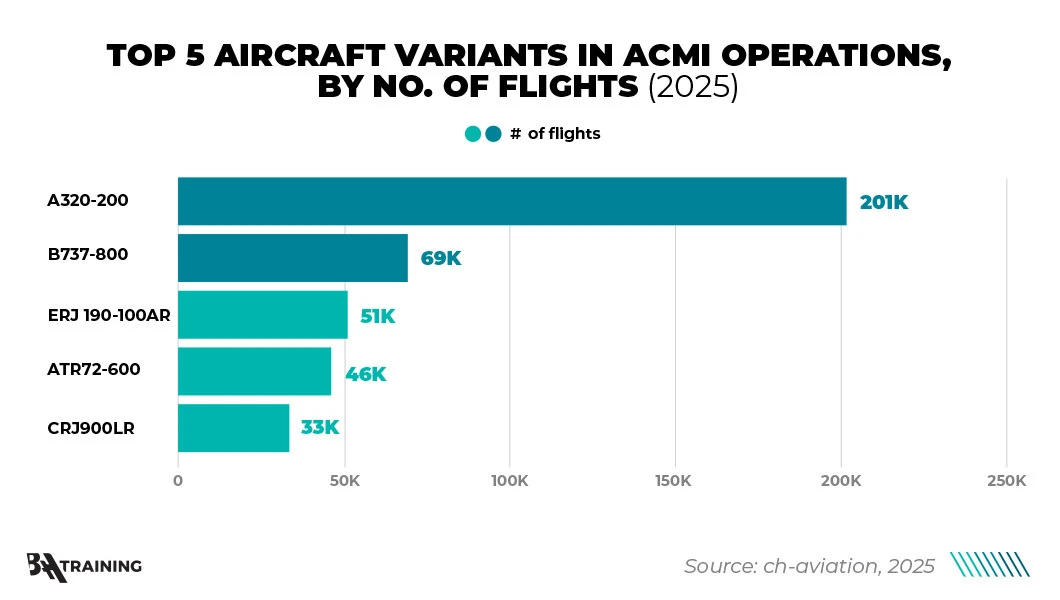
ACMI is overwhelmingly a narrow-body game. The Boeing 737 and Airbus A320 families dominate because they’re the Swiss Army knives of aviation—versatile enough to fly holiday charters to the Mediterranean one week and cover a seasonal flight spike the next. If you’re joining an ACMI operator, there’s a strong chance you’ll be flying where the wind (and roster) takes you.
Geographically, Europe is seen as the ACMI capital of the world. Carriers like Avion Express and dozens of others keep fleets busy with wet-leasing across the continent. The business thrives wherever airlines need flexibility without the commitment of owning metal.
For pilots, this means you’re likely flying proven, high-demand aircraft types—which keeps your CV relevant and your skills transferable if later in your career you decide to move to a traditional carrier.
Operations and Pilot Lifestyle
This is where ACMI gets interesting. You might take off from Brussels on Monday, flying for customer airline A, then spend Thursday through Sunday operating the same aircraft for customer airline B out of Palma. Different routes, different passengers—all on the same Type Rating.
The reality is, though, you’re adapting constantly. Client airlines have their own procedures, preferred airports, and operational quirks. You’ll get comfortable with ambiguity fast, and you’ll become a better stick-and-rudder pilot because you’re not flying the same three routes on autopilot for years.
When it comes to rotation patterns, they vary wildly depending on the contract. But during peak season, this usually means high-intensity blocks with multiple daily short-haul flights, often on a 20-day on/10-day off cycle. For pilots who value chunks of uninterrupted personal time over commuting to the same base five days a week, ACMI schedules can be a hidden gem.
The upside? You’re not stuck in the same operational circle. While your friends at traditional carriers are flying the same route to Frankfurt for the 47th time this year, you might be island-hopping in the Mediterranean. It keeps the job fresh. And you build a skillset that’s genuinely broad—different airports, different ATC environments, different weather challenges.
ACMI Operations vs Traditional Airlines
If you’re used to thinking about pilot careers through the lens of Lufthansa, Air France, or even ultra-low-cost carriers like Ryanair, ACMI operators are completely different. What then actually changes when you’re flying wet-lease contracts instead of a traditional airline model?
Route Stability: Predictable vs. Fluid
Legacy and LCC pilots know their network. Lufthansa’s Munich crew flies the Munich routes. Ryanair bases stay put. Your roster varies, but the operation doesn’t.
ACMI routes, on the other hand, follow the client contract. Spring might be Scandinavian holiday charters to Tunisia; summer could be covering a Vienna-based carrier’s seasonal demand schedule or crew shortage. New airports, new challenges, zero routine—some pilots absolutely live for it, others want to know they’re home every Tuesday.
Scheduling: Structured Bids vs. Contract-Driven Patterns
Traditional carriers use seniority bidding. You optimize your schedule monthly, trade trips, build something commutable if your number’s good enough.
ACMI scheduling is whatever the contract dictates—but one really good thing about this is the roster stability within each contract. Using the 20-on/10-off rotations that give you solid blocks of time off, reserve uncertainty. When you’re off, you’re truly off. One thing to note: when contracts shift, so does your schedule. Your base might be Budapest one quarter, Vilnius the next.
What It Means
Yes, traditional European airlines offer structure, predictability, and clear career ladders. But ACMI operations offer variety, potential for faster advancement, and lifestyle-friendly rotations that can beat reserve life at a legacy carrier. Neither path is objectively better—they’re built for different types of pilots.
Pilot Recruitment and Career Path
The wet-lease operators need pilots constantly, and many have cracked the code on getting low-hour pilots aircraft-ready fast. Enter the MPL (Multi-Crew Pilot License) programs—structured pathways that take you from flight school straight into a First Officer’s position with minimal hour-building.
Unlike traditional airlines that demand 1,500+ hours, ACMI carriers can be entered via MPL programs, which train you directly into multi-crew operations. You’re spending much more time in the full flight simulator and going straight to flying passengers on B737 or A320.
Finding These Opportunities: Pilot Runway
Finding a pilot training program that covers not only initial pilot training, but also multi-crew cooperation (MCC) fundamentals, Type Rating, Base and Line trainings, and offers financing solutions, and a guaranteed job at an airline—sounds like a tough gig. But it doesn’t need to be that challenging if you know where to look.
That’s where an MPL pilot training program, Pilot Runway, comes in. It’s one of the most direct pathways into European ACMI operations and the aviation industry.
Pilot Runway MPL program cadets-in-training.
And it combines all of the aforementioned pilot training (with much more training hours dedicated on a simulator), including the guaranteed job at a European airline—all with an airline-backed loan. You train at our facilities in Lithuania and Spain, earn your EASA MPL license, and go straight into a First Officer position flying B737s or A320s on ACMI contracts across Europe.
It’s designed specifically to feed this pipeline—fast-tracking you from zero experience to a commercial cockpit without the traditional hour-building grind. If this caught your eye, learn more about what exactly the Pilot Runway MPL Cadet program entails and how you can start here: Pilot Runway MPL Cadet Program.
Bottom Line
ACMI isn’t for everyone. If you need absolute schedule predictability or can’t handle your base shifting with contract changes, traditional carriers will suit you better. But ACMI offers operational flexibility that creates some of the best opportunities for new pilots to get skin in the game. You’re building hours fast, flying diverse routes, adapting to different operations, and keeping your skills genuinely sharp—not grinding the same three turns for years on autopilot. For pilots early in their career who want to earn their stripes in real-world commercial operations without waiting a decade for the left seat, ACMI might be exactly the path you’re looking for.
We are proud to announce a major milestone. The official FAA (Federal Aviation Administration) certification of our training equipment in Spain is complete, opening doors to more markets.
Following an audit last month, FAA inspectors evaluated two Flight Training Devices (FTD)—A320 and B737 MAX, and two Full Flight Simulators (FFS)—A320 and B737 MAX. We are pleased to confirm that these devices are now fully qualified and certified, meeting all FAA regulatory standards.
With dual EASA and FAA certification, BAA Training can now provide simulator sessions for FAA-licensed pilots that count directly towards their licensing requirements. This achievement significantly broadens our market reach, allowing us to support international airlines operating under both regulatory frameworks.
This certification reinforces our commitment to maintaining world-class quality standards and strengthens our position in the global aviation training industry.
Prefer to listen? Press play to hear this article.
If you’ve been scounting job opportunities to join an airline as a First Officer in the last few months at least, you might’ve noticed that more European carriers like Ryanair, Wizz Air, Air France or Swiss Airlines are now requiring you to have an APS MCC certification along with your CPL (Commercial Pilot License). What was an additional way to stand out in airline assessments some time ago has slowly become a standard for new pilots. Let’s take a closer look at the APS MCC course.
What is an APS MCC?
APS MCC—or Airline Pilot Standard Multi-Crew Cooperation—is an enhanced version of the MCC (Multi-Crew Cooperation) course. Both are an introduction, a foundation to airline operations and multi-crew cooperation, with APS MCC being the enhanced version of the two.
The idea is to prepare students for the final assessment and act as an introduction before Type Rating training. Essentially, it enhances their pilot competencies and knowledge of airline pilot standards.
Why is it required?
A growing number of airlines require applicants to have this certification because this preparation aligns directly with airline-specific procedures, reducing onboarding time while boosting safety and efficiency. While the course is not tied to any specific airline, the skills and scenarios covered are widely applicable across airline operations.
Reasons airlines value APS MCC:
Operational readiness. APS MCC places pilots in airline-style scenarios using jet simulators such as the Airbus A320 or Boeing 737. Training focuses on automation use, crew resource management (CRM), and high-workload situations similar to everyday line flying. This helps reduce gaps that would otherwise need to be covered during Type Rating training.
Safety and competency focus. The course includes structured assessments based on EASA competencies. It looks at leadership, decision-making, and threat and error management, helping pilots develop the skills airlines expect in a multi-crew cockpit.
Airline hiring advantage. APS MCC signals that a pilot is better prepared for airline operations. For airlines, this means smoother onboarding, more consistent training standards, and an easier transition from training to line flying.
APS MCC is essentially the next step after MCC, taking the basic multi-crew skills to an airline-ready level. To understand exactly what that means, let’s compare APS MCC with the standard MCC course.
Differences between MCC and APS MCC
Both courses focus on teamwork and communication. Both focus on procedures in a simulator environment, performed on an FSTD (Flight Simulator Training Device).
But if the two are essentially the same—aim to prepare for multi-crew operations in commercial aviation—then what is the difference? Well, to put it in very simple terms, MCC teaches you how to work as a crew, while the APS course teaches you how to work as a crew in an airline-style environment. Foundations are the same, but it’s a very different level of ambition.
Skills & Topics Covered
MCC
APS MCC
Multi-crew cooperation fundamentals
+
+
Crew communication & CRM skills
+
+
Pilot Flying & Pilot Monitoring role practice
+
+
Leadership & interpersonal skill development
+
+
Non-technical skills
+
+
Scenario-based training
+
+
Airline-style operational scenarios
–
+
Airline-style operating environment
–
+
Transition from single-pilot to multi-pilot operations
–
+
Jet aircraft handling principles
–
+
Advanced jet flight training
–
+
Preparation for initial Type Rating
–
+
Designed for airline career entry
–
+
Has a final Pass/Fail check
–
+
TL;DR: MCC is the foundation course, answering the question of whether you can function effectively in a multi-crew cockpit. APS MCC goes a step further—it’s the bridge to airline operations, preparing you to start Type Rating training with confidence, not panic.
What does APS MCC cover
Like any other training, the course has a theoretical (self-study and in-class) part and practical training. During the ground school phase, the course covers technical topics like flight management and FMS (Flight Management System) use, monitoring and cross-checking, task sharing, as well as normal, abnormal and emergency operations. Soft skills like situational awareness, decision-making, leadership and crew management are also covered in detail.
For practical training, students usually spend time in type-specific full flight simulators, fixed-base simulators (FBS) or flight training devices (FTD), working on skills like conducting cockpit preparation and briefings, applying combinations of thrust and attitude that ensure a stable and safe flight, managing a much wider range of speed and thrust, practising upset prevention, and many other skills required to operate a commercial airliner.
It’s important to note that while aviation organizations like EASA give indications for the course syllabus, it can slightly vary according to each training provider.
How long is the APS MCC course
A stand-alone APS MCC training takes around 20 days to complete—that’s about 81 hours in total.
When can you complete the course
The APS MCC course is designed for pilots who already hold a Commercial Pilot License. You can complete it in one of two ways:
Alongside your initial pilot training, for example, as part of an ATPL Integrated program or an MPL course.
After modular training, if you’ve already earned your CPL separately, APS MCC becomes an additional certification you’ll need before moving on to jet operations or Type Rating training.
This way, you get the multi-crew skills at the right point in your career, either integrated into your training path or as a step on top of your CPL.
How to choose between MCC and APS MCC courses?
If you already have your CPL in your pocket and are thinking which of the two courses to choose (or whether it’s worth the cost), choosing the right multi-crew course depends on your career goals.
Want to strengthen multi-crew fundamentals first
Standard MCC is enough. It covers core multi-crew cooperation, Pilot Flying (PF) and Pilot Monitoring (PM) roles, and non-technical skills, giving you the essential teamwork and communication experience in a simulator environment.
Aiming for airline operations soon
In this case, the APS MCC course is the clear choice. It builds on the MCC course foundations but adds airline-style scenarios, advanced jet handling skills, and operational readiness—everything you need before starting Type Rating training.
If you’re also targeting a European airline, APS MCC is increasingly the expected standard.
Next steps after the completion certificate
Once you’ve completed APS MCC, you’re officially airline-ready in terms of multi-crew skills and simulator experience.
One common route is to apply directly to airlines for cadet programs or direct-entry First Officer positions. Many European carriers now expect APS MCC as part of their hiring requirements or view it as a strong advantage, so having the certificate can make your application stand out. Once hired, the airline usually sorts out your Type Rating training, meaning you’ll continue directly into jet-specific training with the support and guidance of your new employer.
Alternatively, some pilots choose to self-sponsor their Type Rating after APS MCC. This allows you to take the next step independently, booking Type Rating training with a flight school or training provider of your choice. Self-sponsoring gives flexibility in timing and aircraft type, but it comes with additional costs and requires careful planning to ensure you meet airline hiring requirements afterwards.
In both paths, completing APS MCC first ensures you’re fully prepared for the technical, procedural, and high-workload demands of Type Rating training and airline operations.
Bottom Line
APS MCC equips pilots with the skills and confidence needed to operate in airline-style, multi-crew environments. Unlike standard MCC, it includes advanced jet handling, airline scenarios, and preparation for Type Rating, giving pilots a clear advantage when moving into airline operations.
For CPL holders aiming for a European airline, APS MCC can open doors to direct entry or streamline self-sponsored Type Rating training. Completing the course ensures pilots are ready to transition smoothly into the cockpit and meet the expectations of airlines from day one.
If you’re planning your next step toward an airline career, our APS MCC course is designed to support that transition. You can explore the program details and apply directly on our website here.
Prefer to listen? Press play to hear this article.
Type Rating activity, on the other hand, faced headwinds from aircraft delivery delays and market adjustments.
For training organizations, 2025 required balancing immediate constraints with long-term positioning. The year showed that airlines were no longer simply reacting to staffing gaps but building structured pathways to meet demand they knew was coming. Aira Klusaitiene, Chief Sales Officer at BAA Training, says that airlines are now starting to plan ahead much more substantially.
“After years of reactive hiring, we’re seeing serious investment in Ab Initio and cadet programs. They know they’ll need pilots, and they’re acting on it now.”
Airlines invested in Ab Initio and MPL training pipeline
Throughout 2025, Ab Initio training saw renewed momentum as airlines shifted from short-term solutions to long-term workforce planning.
Multi-Crew Pilot License programs moved further into the mainstream. While MPL has existed in Europe for years, 2025 brought notable expansion. For example, the Spanish low-cost airline Volotea launched its partnership with BAA Training in February 2025, offering cadets a job-guaranteed pathway. Qatar Airways and other carriers continued expanding their established cadet initiatives across Europe as well.
“Airlines using MPL programs consistently tell us their cadets are better prepared for line operations,” Klusaitiene says. “The training is tailored to airline procedures from day one, which makes the transition smoother. We’re also seeing airlines value the stability—they know exactly when pilots will be ready and what competencies they’ll have.”
For training academies, MPL offered greater stability. Programs backed by airlines reduced reliance on self-funded students and aligned training output directly with airline demand. The model was proving its value not as an alternative to traditional routes, but as a strategic workforce tool.
A constrained year for Type Rating
Type Rating activity in 2025 told a different story. Aircraft delivery delays from Boeing and Airbus created a trickle-down effect across the training market. With manufacturers struggling to meet delivery schedules—and not expecting to fully recover until 2031-2032—airlines worked with the resources they already had.
Fleet growth stalled, and so did the need to train pilots on new aircraft types. Airlines maximized existing capacity rather than expanding, which meant fewer Type Rating courses than in previous years. The situation was complicated by airline exits from the market late in the year, which returned experienced pilots and aircraft to the available pool.
“Last year was challenging for Type Rating,” Klusaitiene notes. “Deliveries slowed significantly, and airlines focused on optimization. We saw experienced pilots put back into the market. But even with that, fleet transitions—like airlines switching aircraft families for cost-effectiveness—still created pockets of demand.”
Narrow-body aircraft, which represent approximately 60% of the commercial aircraft market, remained the focus for future fleet planning. As of mid-2025, narrow-body orders accounted for 88.9% of Airbus’s backlog—7,660 aircraft out of 8,617 total. However, delivery delays meant airlines had to defer expansion timelines and optimize existing capacity while waiting for new aircraft.
Looking ahead to 2026
While 2025 presented challenges for Type Rating, the outlook for 2026 signals a geographic and operational shift in training demand.
Asia and the Middle East are positioned to drive the next phase of growth. Middle Eastern carriers placed hefty aircraft orders during 2025. FlyDubai ordered 225 aircraft (150 A320neos and 75 B737 MAXs), while Qatar Airways secured 160 widebody aircraft (130 B787 Dreamliners and 30 B777-9s) in what became Boeing’s largest widebody order.
Aira Klusaitiene, Chief Sales Officer at BAA Training
“2026 looks different regionally,” Klusaitiene says. “Middle East orders are significant. Qatar Airways alone ordered 160 widebody aircraft. When those deliveries accelerate, training demand will follow. In Vietnam, for example, we’re seeing both fleet expansion from established carriers and new airline launches. This creates sustained pilot demand across multiple fronts.”
Vietnam exemplifies the regional growth trajectory. Vietjet ordered 20 A330neos in May 2025, doubling its widebody commitment, while Vietnam Airlines planned a tender for 50 narrowbody aircraft. The market also attracted new entrants: Sun PhuQuoc Airways launched in November 2025 with plans to operate 100 aircraft by 2030, targeting 20 million passengers annually.
The concentration of narrow-body orders—particularly A320 and B737 families—means training demand will align closely with delivery schedules. Manufacturers have indicated they expect to address the current backlog by 2031-2032, but as deliveries begin to normalize, training organizations will need to scale type rating capacity accordingly.
The Middle East’s aviation sector provides context for this growth. In the UAE, aviation contributes 18.2% to national GDP—over five times the global average of 3.9%. The region’s aviation sector is projected to reach $730 billion in GDP contribution by 2043, more than doubling from current levels.
Airlines continue to face uncertainty around delivery timelines, which affects their ability to plan training intake with precision. However, the underlying demand remains clear: when aircraft arrive, pilots will need to be ready.
How 2025 shaped up to be
Pilot training in 2025 reflected a market in transition. Ab Initio and MPL programs expanded as airlines invested in long-term pilot pipelines, while Type Rating activity contracted under the weight of aircraft delivery delays and market adjustments. It became clear that airlines were planning strategically rather than reacting tactically.
The year reinforced that training demand follows fleet movement. When deliveries stall, Type Rating slows. When airlines commit to future growth, ab initio investment accelerates. For training organizations, 2025 required balancing immediate capacity constraints with positioning for the demand that manufacturers’ backlogs promise will eventually arrive.
Geography also played a defining role. While Europe maintained steady activity, the Middle East and Asia emerged as the centers of future growth, driven by substantial aircraft orders and ambitious aviation expansion plans. Vietnam’s launch of Sun PhuQuoc Airways and the Middle East’s record-breaking orders signal where the next wave of training demand will concentrate.
As 2026 begins, the training market stands at an inflection point. Aircraft will eventually be delivered. Airlines will need pilots ready to fly them. Training providers that built capacity, maintained partnerships, and aligned with airline planning cycles during the constrained period will be positioned to meet that demand when it materializes.
Updated on Jan 2, 2026.
Prefer to listen? Press play to hear this article.
While some technological innovations take more time to be adapted—after all, aviation is a very strictly regulated industry—others tend to find their footing quickly. These emerging technologies encompass a variety of industry fields, from pilot training and aircraft maintenance to airport infrastructure and beyond.
What is the latest aviation technology? Let’s examine what innovations are appearing in the aviation industry and which ones are expected to shape 2026.
1. Artificial Intelligence (AI)
AI and machine learning algorithms continue to revolutionize aviation operations, and in 2026, we’re seeing the technology mature beyond experimental phases into widespread deployment across the industry.
By leveraging big data, these technologies enable airlines to optimize routes, reduce fuel consumption, and deliver personalized passenger experiences through data-driven insights and automation. AI-powered systems also bolster safety and situational awareness, with spending in the aerospace and defense sector on AI and generative AI expected to reach $5.8 billion by 2029—3.5 times higher than 2025 levels.
Predictive Maintenance
Predictive maintenance has evolved from an expensive experiment to a proven strategy that saves airlines significant money in the long term. Airlines and MRO providers are now piloting AI-driven maintenance diagnostics and predictive health monitoring for equipment, inspection, and inventory optimization at scale.
Airplanes have numerous sensors that continuously monitor aircraft parts like engines, wings, landing gear, and avionics. The data is then analyzed by applying machine learning algorithms, and predictions of equipment failures are made before they occur. This is how you can stick to a maintenance strategy that keeps an aircraft in its best shape without conducting needless maintenance tasks or stocking up on spare parts.
This is how you can stick to a maintenance strategy that keeps an aircraft in its best shape without conducting needless maintenance tasks or stocking up on spare parts.
One example of an aviation company known for being a leader in predictive maintenance is Lufthansa Technik MRO (Maintenance, Repair and Overhaul). Through early detection of potential problems, the company enhances the safety and reliability of the aircraft, meeting the highest industry standards. It also provides digital platforms and tools, allowing airlines to access and visualize the state of their aircraft in real-time.
Agentic AI and Beyond
In 2026, we’re also seeing the rise of “agentic AI”—systems that can handle complex, multi-step workflows with minimal human intervention. Commercial aviation is leveraging AI for scheduling flights, managing crews, and enhancing passenger experience in ways that were impossible just a few years ago. AI-driven simulators continue to offer pilots a safe space to practice by recreating a wide range of flight conditions, emergencies, and system failures, with real-time feedback that personalizes training for each pilot’s unique needs.
2. Cybersecurity
If there’s one trend that has emerged as the most urgent priority for aviation in 2026, it’s cybersecurity. The increasing digitization of airlines, airports, and air traffic management systems has expanded the sector’s vulnerability to cyberattacks at an alarming rate.
Cyberattacks in aerospace surged by 600% between 2024 and 2025, prompting new regulations and a dramatic increase in spending. According to the Allianz Risk Barometer (2025), 38% of aviation industry respondents now identify cyber loss as their primary concern, surpassing all other risks. Aviation cybersecurity spending has been projected to climb from $10 billion in 2025 to nearly $16 billion by 2032, reflecting the escalating threat environment.
The threats are diverse and sophisticated:
Ransomware attacks have disrupted major airports, including the September 2024 Rhysida ransomware attack on Seattle-Tacoma International Airport that demanded a $6 million ransom
GPS spoofing and interference affecting both surveillance and commercial flights—India reported over 465 cases between 2023 and 2025
Supply chain attacks targeting airlines, with 71% of attacks focusing on stealing login credentials and unauthorized IT infrastructure access
Data breaches at major aerospace manufacturers, including Boeing’s 2023 LockBit ransomware attack
Regulatory Response and Solutions
The industry and regulators are responding aggressively. The FAA has mandated that airlines establish and maintain cybersecurity programs, while the European Union Aviation Safety Agency developed a cybersecurity roadmap that takes effect in 2026 to address threats to air traffic management systems and operators.
Aviation organizations are deploying advanced cybersecurity frameworks, including:
AI-driven threat detection systems that have improved proactive threat detection by 20%
Zero-trust security frameworks to prevent unauthorized access
Next-generation firewalls and Security Information and Event Management (SIEM) systems
Blockchain technology for secure flight operations and identity verification (adoption increased by 25%)
Cloud-based cybersecurity solutions for real-time data protection (deployment rose by 40%)
Modern aircraft contain millions of lines of software code controlling flight systems, navigation, passenger services, and maintenance reporting. A successful cyberattack could have catastrophic consequences ranging from flight safety incidents to operational disruption to theft of proprietary technology. That’s why cybersecurity has become non-negotiable for aviation’s future.
3. eVTOL & Advanced Air Mobility
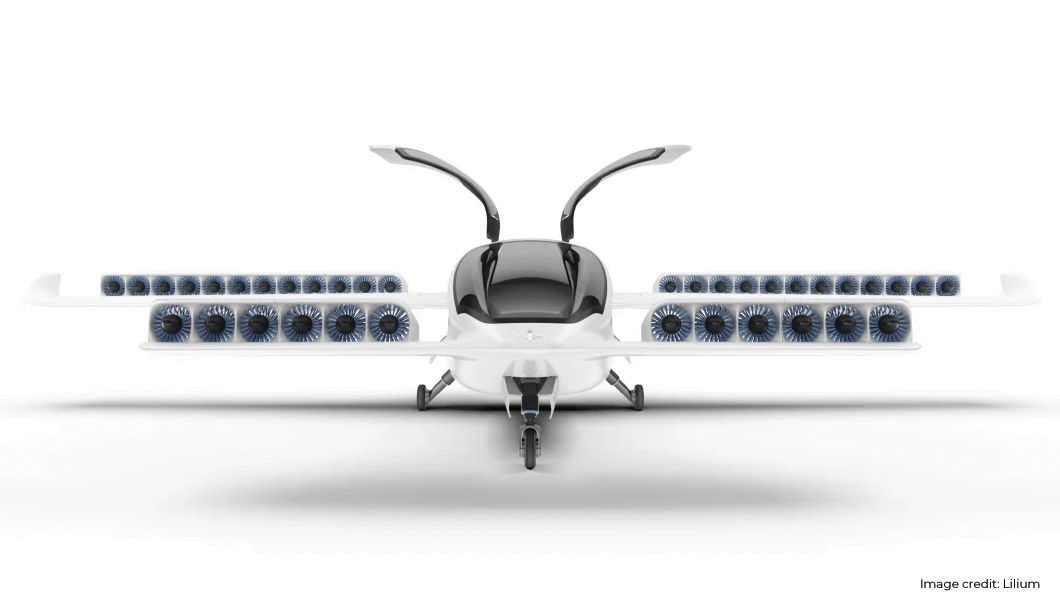
Electric Vertical Take-Off and Landing (eVTOL) aircraft are no longer a distant dream—2026 marks the year when air taxis transition from test flights to actual commercial operations.
Commercial Launch
After years of development and testing, major eVTOL companies are targeting 2026 for their commercial launches. Joby Aviation believes 2026 will be the year its air taxi begins flying passengers. The company intends to integrate its flagship S4 aircraft on the Blade Air Mobility and Uber platforms to offer 10-20-minute flights between U.S. city centers and airports. Joby is partnered with Delta Air Lines, with plans for service in major cities such as New York and Los Angeles. The company’s first commercial operations are planned for Dubai, where construction is already underway on its first commercial vertiport site at Dubai International Airport.
In 2025, Joby’s test aircraft completed more than 850 flights—a 260% increase over 2024. The company successfully completed the first piloted eVTOL flight between two U.S. public airports (Marina Municipal Airport to Monterey Regional Airport in California), demonstrating integration with FAA-controlled airspace and traditional air traffic.
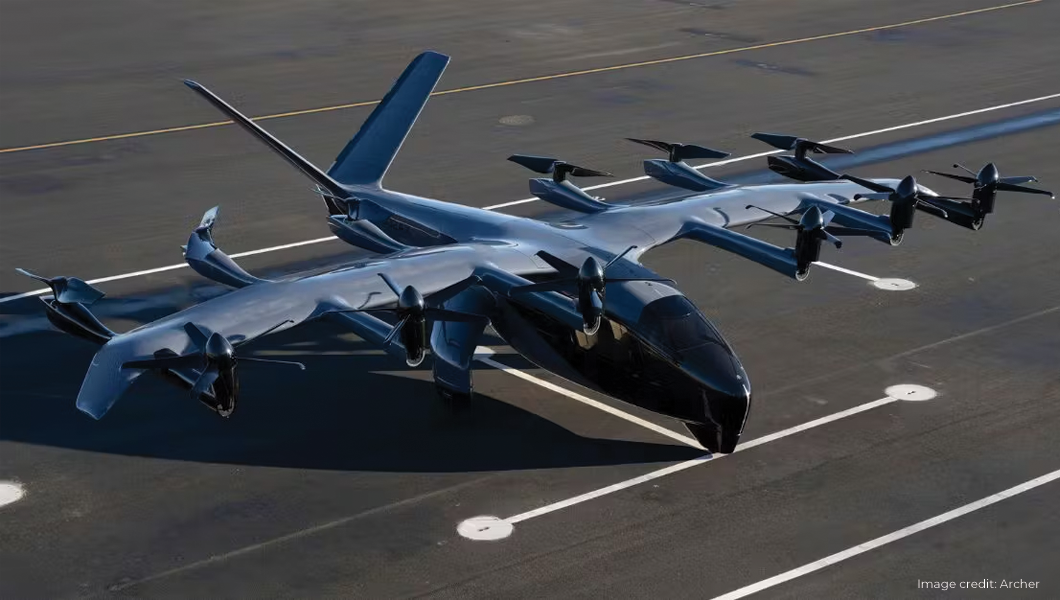
Archer Aviation is developing its Midnight eVTOL aircraft, optimized for urban environments with a range of about 60 miles and speeds up to 150 miles per hour. Archer plans to launch commercial air taxi service in Abu Dhabi in late 2026, while also pursuing defense contracts to generate revenue during the civilian certification process.
The Technology and Its Promise
eVTOLs seem superior in many ways: reduced noise pollution, faster air travel, sleeker design, and—the important bit—zero emissions when using electric power. Companies like Joby can reach speeds up to 200 miles per hour and cover distances of up to 150 miles. A flight from downtown New York to JFK Airport takes just seven minutes compared to nearly an hour by car. While most current designs have a pilot on board, experimental autonomous eVTOLs have also successfully undergone testing. However, it’s important to note that while some industry forecasts are optimistic about 2026 launches, other analysts project entry into service in mid-to-late 2027 or early 2028, citing the need for more flight hours and completion of Type Inspection Authorization (TIA) testing.
Beyond Passenger Transport
It’s not just passenger eVTOLs making progress. AIR delivered its first production-ready eVTOL cargo aircraft in December 2025, with operations beginning in early 2026. The company plans to deliver an additional 18 aircraft throughout the year, demonstrating that eVTOL cargo systems are moving beyond test platforms into real-world operations.
Industry Giants Watching Closely
The major players in the aviation industry, such as Boeing (through its subsidiary Wisk Aero) and Airbus, have also been investing in advanced air mobility technology to maintain competitive edge. While full autonomy and single-pilot operations face significant regulatory hurdles, the infrastructure and technology are being developed today to support tomorrow’s aviation landscape.
4. Biometrics & Digital Identity
Biometric technology continues to revolutionize airport security and passenger processing, with 2026 seeing significant advancements in adoption rates and use cases.
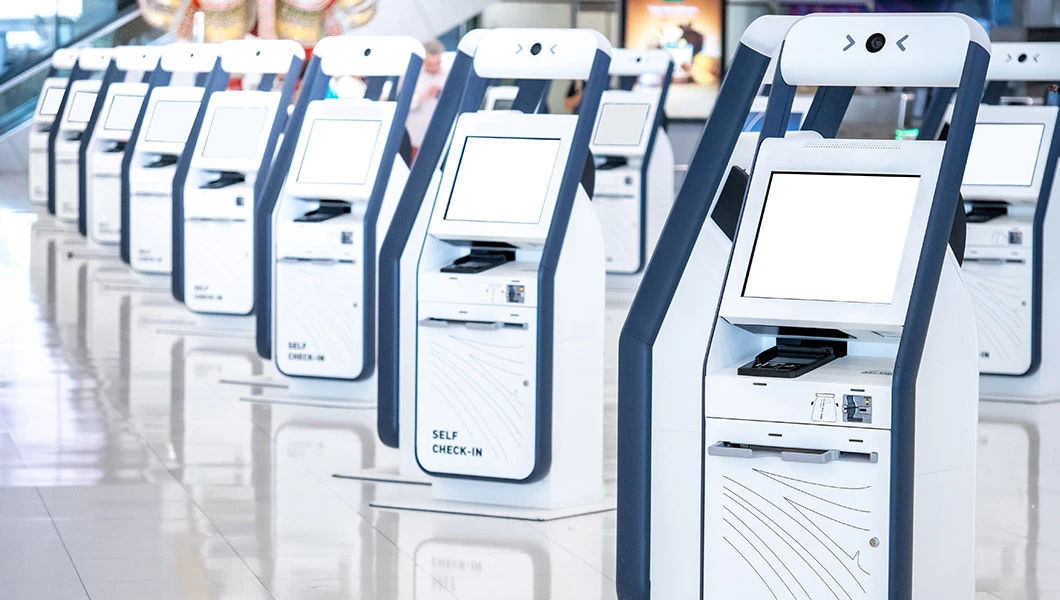
According to IATA’s November 2025 Global Passenger Survey (GPS), 74% of travelers say they would be willing to share their biometric information if it means they can skip showing a passport or boarding pass at checkpoints like check-in, security, border control, and boarding. Half of passengers (50%) have already used biometrics at some point in their airport journey—up from 46% in 2024—with biometric use rising by nearly 20 percentage points since 2022.
Systems like the “Smart Travel” initiative at Hamad International Airport in Doha utilize palm vein scanning to streamline processes, allowing passengers to move through various stages without physical documents. This not only enhances security but also significantly reduces wait times, making travel more efficient and convenient.
Off-Airport Solutions Gaining Traction
One of the most exciting developments for 2026 is the rise of off-airport solutions. Travelers are showing strong interest in technologies that let them arrive at the airport “ready to fly,” including:
Remote check-in
Off-airport bag drop
Biometric verification completed before arriving at the terminal
These innovations address one of travelers’ biggest pain points—long lines and wait times at airports—while simultaneously improving security through more reliable identification methods.
The integration of multimodal biometric systems, which combine multiple biometric identifiers (such as facial recognition, fingerprints, and iris scans), further enhances both security and user convenience. The use of biometrics in self-bag drop systems is projected to increase significantly, generating substantial revenue and improving overall operational efficiency.
Addressing Privacy Concerns
Public concerns about privacy and data security remain a challenge. However, the industry is actively addressing these issues by improving data protection measures and increasing transparency about data usage and storage. As biometric technology becomes more ubiquitous, establishing trust through responsible data handling is critical.
Looking ahead, the adoption of biometric technology in airports is expected to grow rapidly, making air travel smoother and more secure for passengers worldwide.
5. Immersive Technologies (XR/VR/AR)
Aviation has always been at the forefront of simulation technology, but 2026 marks a new era where Extended Reality (XR), Virtual Reality (VR), and Augmented Reality (AR) are expanding far beyond traditional training applications.
The AR/VR training market size in aviation is expected to reach $77 million by 2030, but the most exciting developments are happening right now. Virtual and augmented reality are proven to reduce aerospace training time by up to 75% and enhance pilot, astronaut, and technician readiness.
Modern VR training systems offer immersive, hands-on experiences for student pilots by recreating a wide range of flight conditions, emergencies, and system failures in realistic environments. With VR head-mounted displays, trainees find themselves in environments with lifelike 3D effects and 360-degree views of their surroundings, allowing them to better perceive distances, shapes, and spatial relationships in virtual cockpits. Thanks to the portability of VR headsets, pilots can perform procedure training anywhere, at any time—a flexibility that’s revolutionizing how airlines and flight schools approach training.
Digital twins simplify design workflows and project management, while XR systems aid in emergency response training, maintenance, and remote engineering collaboration. Airlines are increasingly integrating these technologies into Multi-Crew Cooperation (MCC) and Type Rating training stages to ensure pilots can practice procedures and gain experience before ever stepping into an actual aircraft.
The Passenger Experience Revolution
Perhaps the most groundbreaking development is the expansion of immersive technologies into the passenger experience. In October 2024, Lufthansa became the first airline worldwide to offer virtual and augmented reality entertainment options for passengers in its Allegris Business Class Suites with its Extended Reality (XR) Inflight Experience. This pioneering move has set the stage for broader industry adoption in 2026.
As we move through 2026, immersive technologies are no longer just a novelty for premium cabins—they’re becoming a competitive differentiator. Airlines are exploring XR applications beyond entertainment, including virtual cabin tours that allow passengers to preview aircraft interiors before booking, immersive destination previews that showcase hotels and attractions at their destination, and even virtual shopping experiences for duty-free purchases.
The technology is also being piloted for enhanced safety briefings, where passengers can experience emergency procedures in immersive 3D rather than watching traditional videos. Early trials show that passengers retain safety information significantly better when presented through XR compared to conventional methods.
Maintenance and Engineering Applications
Immersive technologies are also transforming aircraft maintenance and engineering. AR glasses allow technicians to see step-by-step instructions overlaid on the actual components they’re working on, reducing errors and training time. Remote experts can guide on-site personnel through complex repairs by seeing exactly what the technician sees and providing real-time annotations.
As immersive tech like the Apple Vision Pro and Meta Quest continue to evolve, the aviation industry is defining use cases ranging from sales tools to sell destinations, to enhanced safety briefings, to virtual cabin tours for aircraft purchases. The potential is just beginning to be realized.
Honorable Mentions
6. Quantum Computing
While still in its early stages for practical aviation applications, quantum computing is emerging as a technology that could fundamentally transform aerospace design and operations in the coming decade.
Quantum algorithms can process information in ways impossible for classical computers, offering potential breakthroughs in:
Flight route optimization: Factoring in distance, congestion, weather, and fuel efficiency simultaneously to find truly optimal paths
Materials design: Simulating molecular-level interactions to discover ultra-light, strong composites for aircraft
Aerodynamic simulations: Modeling complex airflow and turbulence more accurately and quickly than ever before
Engine design: Simulating combustion and fuel cell chemistry that is extremely difficult with classical computing
Major aerospace companies are actively exploring quantum applications. Airbus is looking at quantum computing to help with hydrogen fuel cell propulsion for future zero-emission aircraft. Rolls-Royce has been exploring “quantum-inspired” computational fluid dynamics to improve engine aerodynamics. Boeing, NASA, and SpaceX are all investing in quantum research for aerospace applications.
IBM projects the demonstration of an error-correcting quantum computer by 2029, which is expected to greatly expand the application space. Quantum algorithms are already delivering up to 20× faster optimization across aerospace workflows in simulated environments. U.S. government funding for quantum computing R&D nearly doubled from $449 million in 2019 to about $968 million in 2024, and DARPA launched the Quantum Benchmarking Initiative (QBI) 2026 to spur industry development of utility-scale quantum computers capable of surpassing supercomputers by 2033.
While quantum computing won’t transform aviation operations overnight, organizations that begin exploring use cases now will be positioned to capitalize when the technology matures. The years leading to 2029 provide critical time for aerospace leaders to identify transformative optimization use cases.
7. Sustainable Aviation Fuels (SAFs)
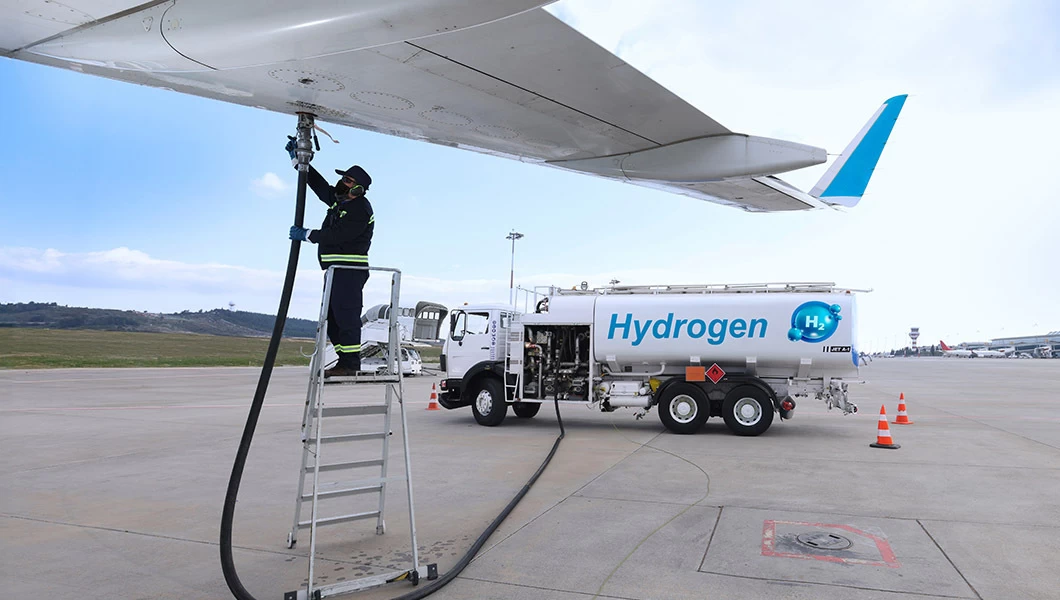
The push for sustainability remains at the forefront of aviation technology trends in 2026, with Sustainable Aviation Fuels (SAFs) leading the charge toward reducing the industry’s environmental footprint. SAFs are produced from renewable resources such as agricultural waste, algae, and municipal waste, providing a cleaner alternative to conventional jet fuel. SAFs can reduce carbon emissions by up to 80% compared to traditional fuels over their lifecycle.
The regulatory environment is accelerating adoption. The European Union’s ReFuelEU Aviation Initiative sets clear targets for blending SAF: 2% by 2025, 6% by 2030, 34% by 2040, and 70% by 2050. The International Air Transport Association (IATA) has committed to reaching net-zero emissions by 2050, counting on SAF to provide 65% of the needed reductions. Airlines like United, Delta, and British Airways have already begun integrating SAFs into their fleets, with the goal of significantly increasing their usage over the next decade. Several production methods support this effort, including HEFA (Hydroprocessed Esters and Fatty Acids), Fischer-Tropsch processes, and Alcohol-to-Jet technology.
Despite their potential, the adoption of SAFs still faces challenges, such as high production costs and limited availability. However, ongoing investments and advancements in production technologies, along with collaborations between airlines, fuel producers, and governments, are making SAFs more accessible and economically viable.
Bottom Line
The aviation industry in 2026 stands at a pivotal moment where transformative technologies are moving from experimental phases to real-world deployment. From AI systems that optimize every aspect of flight operations to eVTOL aircraft preparing for commercial launch, from critical cybersecurity defenses protecting our interconnected systems to immersive technologies revolutionizing both training and passenger experience—these advancements are setting new standards for safety, efficiency, and sustainability.
Forward-looking organizations that embrace these technologies today will lead the industry tomorrow. As we watch 2026 unfold, the question is no longer whether these innovations will reshape aviation, but how quickly the industry can adapt to harness their full potential while maintaining the safety and reliability that remain aviation’s cornerstone.
Prefer to listen? Press play to hear this article.
From cockpit automation to ultra-efficient engines, the industry has been reshaped by people who refused to settle for ‘if it ain’t broken, don’t fix it.’ Let’s take a look at the seven aviation innovations that changed the experience of flying for pilots, airlines, and passengers worldwide.
1. Jet Propulsion Systems
The introduction of the jet propulsion system in the mid-20th century helped redefine long-haul travel. Jet engines produced far greater thrust, delivered smoother performance, and used fuel more efficiently than their propeller-driven predecessors. Suddenly, routes like New York to London were measured in hours rather than ‘hope you packed enough sandwiches.’
Influence on Future Designs
Whittle’s turbojet established the blueprint for modern jet propulsion. His design—with a compressor, combustion chamber, and turbine producing continuous thrust—proved scalable, efficient, and adaptable, forming the foundation for both military and commercial engines. Von Ohain’s parallel work demonstrated the viability of jet-powered flight, but it was Whittle’s configuration that offered the flexibility engineers needed to improve performance, increase fuel efficiency, and expand the range of aircraft. Today, every jet engine in service owes its core principles to these early breakthroughs.
2. Sustainable Aviation Fuel (SAF)
Fast-forward to the 21st century, and aviation found itself facing a new frontier: sustainability. Enter Sustainable Aviation Fuel, or SAF—a renewable or synthetic alternative to conventional jet fuel that can reduce lifecycle carbon emissions by up to 80%. For an industry built on kerosene, that’s nothing short of transformative.
Impact on the Aviation Industry
SAF is quickly becoming the backbone of aviation’s decarbonization strategy. Airlines worldwide are signing long-term offtake agreements, governments are introducing mandates, and manufacturers are testing 100% SAF capabilities—a crucial step toward widespread adoption.
While production volumes are still limited, the industry sees SAF as its most immediate and scalable solution for cutting emissions. As technology advances and costs decrease, SAF is expected to transition from a niche innovation to a mainstream fuel, marking the next step for the aviation industry.
3. Fly-By-Wire (FBW) Control Systems
If jet engines pushed aviation into the future, Fly-by-Wire (FBW) systems gave pilots the tools to keep up. FBW replaces heavy mechanical linkages with electronic signals, turning pilot inputs into precise computer-interpreted commands. This made modern aircraft lighter, more responsive, and enhanced flight safety.
How Fly-By-Wire Changed Piloting
Fly-by-Wire made aircraft lighter, safer, and more efficient by replacing mechanical linkages with digital control. It introduced flight envelope protections, improved handling, and reduced pilot workload—all of which shaped how modern airliners operate today.
Because FBW is such a foundational technology, we explore it in more detail in our dedicated article here.
4. GPS Navigation System
The introduction of satellite-based navigation altered how aircraft plan, route, and execute flights. Unlike traditional systems that relied on ground stations with limited range, GPS provides continuous, global positioning accuracy. This shift gave aviation a level of precision and reliability that older radio-based aids simply couldn’t match.
GPS Effect on Modern Flights
Satellite navigation brought several major advantages:
Greater route flexibility: Pilots are no longer tied to ground-based navigation corridors, allowing more efficient routing.
Improved approach procedures: GPS enabled Area Navigation (RNAV), Global Navigation Satellite System (GNSS), and Required Navigation Performance (RNP) approaches, offering precision-like accuracy at airports without Instrument Landing Systems (ILS). Yes, aviation loves its alphabet soup, but behind all those letters is a simple truth: pilots no longer have to play connect-the-dots with ground stations.
Enhanced situational awareness: The constant stream of positional data supports terrain awareness systems, performance monitoring, and advanced flight management.
Fuel and time efficiency: More direct routing and optimized descent profiles reduce fuel burn and overall flight time.
These improvements have made GPS a core component of international aviation. It supports both daily commercial operations and long-term infrastructure planning, especially in regions where building and maintaining ground stations is impractical.
5. Composite Materials in Aircraft Design
The shift from traditional aluminum alloys to advanced composite materials was a major turning point in aircraft manufacturing. Composites—primarily carbon-fiber reinforced polymers (CFRP)—offer high strength, low weight, and excellent fatigue resistance. Suddenly, building a plane was less like working with giant aluminum cans and more like crafting a Formula 1 car—every gram mattered.
How Composite Materials Influenced Aviation
The move to composite airframes has several measurable benefits:
Reduced fuel burn: Lower structural weight translates directly into improved fuel efficiency and extended range.
Lower maintenance requirements: Composites have a very strong resistance to corrosion, reducing long-term inspection and repair demands.
Better cabin pressurization: Composite fuselages can maintain higher cabin humidity and more comfortable pressure levels without fatigue cracking.
Improved aerodynamics: The ability to mold smooth, uninterrupted surfaces supports more efficient wing and fuselage designs.
Together, these advantages have made composites a core material in next-generation aircraft. As production methods evolve, the industry is moving toward even higher composite percentages and exploring hybrid materials that push efficiency and durability further.
6. Advanced Avionics and Digital Cockpit Systems
Flying a 1960s cockpit meant monitoring dozens of analog gauges like a Vegas slot machine. Modern glass cockpits? More like flying with an iPad that happens to have 300 tons of metal attached.
Advanced avionics brought digital displays, sophisticated monitoring tools, and integrated flight management systems into the flight deck. It replaced the analogue gauges and scattered instruments with unified, data-driven interfaces. These systems have fundamentally changed how pilots interact with the aircraft and manage complex operations.
What Advanced Avionics Include
Modern cockpit systems bring together quite a few technologies that support navigation, automation, and aircraft monitoring. At the core is the Flight Management System (FMS), which handles route planning, performance calculations, and in-flight optimization. Primary Flight Displays (PFDs) and Multi-Function Displays (MFDs) consolidate essential data—attitude, airspeed, engine status, navigation overlays—into clear, digital layouts that replace clusters of analogue gauges.
Aircraft also rely on terrain awareness and warning systems to prevent ground proximity incidents, as well as advanced weather radar and predictive wind-shear detection to support safer decision-making in changing conditions. All of this integrates with modern autopilot and auto-throttle functions, allowing the aircraft to follow complex procedures with a high degree of precision.
How Advanced Avionics Changed Flight Operations
The introduction of advanced avionics brought improvements like:
Enhanced situational awareness: Digital displays present information in intuitive, consolidated formats, reducing the likelihood of missed cues.
More efficient decision-making: Automation assists with complex calculations, performance planning, and fuel optimization.
Improved safety: Integrated alerting systems help crews detect hazards earlier, from terrain proximity to weather patterns.
Reduced workload: Automation handles routine tasks, allowing pilots to focus on supervision and strategic decisions.
These advancements have made digital cockpits the standard for modern commercial aviation and set the foundation for future developments in automation and pilot–aircraft interaction.
7. Winglets and Aerodynamic Performance
Winglets are one of the most recognizable—and quietly influential—aerodynamic upgrades in modern aviation. Those little upturned tips you see on wingtips? They’re not just there to look aerodynamic in Instagram photos—though they do that too.
The wingtips reduce the strength of wingtip vortices, which are swirling pockets of air created by the pressure difference above and below the wing. By minimizing this induced drag, winglets improve fuel efficiency, climb performance, and overall aerodynamic stability.
The Impact on Flight Performance
Winglets have delivered some of the most cost-effective efficiency gains in commercial aviation. Fuel consumption savings of 3–7% across a fleet may sound modest individually, but they scale dramatically when applied to thousands of flights per day. Beyond fuel efficiency, winglets also support quieter operations and contribute to lower carbon emissions by reducing the thrust required during all phases of flight.
Their success has made them a near-standard feature on contemporary aircraft, and ongoing refinements continue to push aerodynamic performance further without major structural overhauls.
Bottom Line
Aviation didn’t leap forward through one breakthrough. It moved ahead through decades of ideas, experiments, and clever engineering that solved very real challenges in the sky.
From jet propulsion to sustainable fuels, from digital cockpits to boosted aerodynamic performance, each innovation pushed flying closer to what we now consider “normal.” And the pace isn’t slowing. As new materials, greener fuels, and smarter systems continue to emerge, the next generation of game-changers is already lining up on the horizon.
With Gen Z now comprising over a quarter of the global workforce, the industry actively recruits younger pilots while retaining experienced professionals. The result? Multi-generational flight decks where each pilot brings distinct strengths shaped by different eras.
Teaching the Same Skills to Different Minds
Type rating training has traditionally followed a standardized approach: theory, simulator sessions, base and line training, all built around consistent performance standards. What’s changing isn’t the standards themselves, but how instructors deliver the material to maximize learning effectiveness across different generations.
Younger pilots often gravitate toward interactive, technology-integrated learning tools. According to recent industry analysis, more than 36% of Gen Z students prefer an interactive learning experience, having grown up with instant feedback loops through gaming and digital platforms. They’re comfortable with rapid iteration—making mistakes in a simulator, receiving immediate data on what went wrong, and adjusting accordingly. Gen Z cadets expect sophisticated flight training apps, real-time dashboards, and simulators that reflect airline-level precision.
More experienced pilots typically value structured progression and thorough instructor-led debriefs. They bring pattern recognition developed over thousands of flight hours, which allows them to contextualize new aircraft systems within their broader operational experience. Their learning often benefits from connecting new procedures to established mental models built during years of flying less automated aircraft.
“We’ve found that the most successful type rating programs recognize that different pilots process information differently, regardless of age,” notes Stian Skaar, Head of Training at BAA Training. “The key is offering multiple pathways to the same competency standard—whether that’s through e-learning modules, traditional classroom sessions, or scenario-based simulator training. Our instructors blend digital tools with face-to-face instruction to engage both ends of the spectrum.”
Stian Skaar, Head of Training at BAA Training
Effective type rating instructors in this day and age combine both approaches. Digital learning management systems provide younger pilots with the instant-access resources they expect, while maintaining face-to-face instruction that reinforces critical thinking and systems understanding. Simulator sessions incorporate both immediate technical feedback through data displays and structured debriefs that encourage discussion and knowledge transfer between crew members.
Communication and CRM Meet Them in the Middle
Crew Resource Management (CRM)—the systematic approach to teamwork, communication, and decision-making in the cockpit—takes on new dimensions when generations intersect. CRM focuses on the cognitive and interpersonal skills needed to manage resources within an organized system, emphasizing interpersonal communication, leadership, and decision-making.
Communication styles shaped by generational contexts can influence cockpit dynamics. Younger pilots, accustomed to rapid digital communication and less hierarchical workplace structures, may need to adjust to the more deliberate, protocol-driven exchanges required in aviation. Conversely, experienced pilots benefit from understanding that younger crew members’ direct communication style isn’t disrespectful—it’s simply a different cultural norm around hierarchy and feedback.
According to Skaar, type rating training provides an ideal environment to foster this mutual understanding. “When simulator crews include pilots from different generations, we can highlight how diverse perspectives strengthen safety,” he explains. “A younger first officer might spot an automation anomaly more quickly, while an experienced captain recognizes a pattern from previous incidents. The teamwork emerges when both feel empowered to speak up.”
Debriefs explore not just what happened technically, but how the crew communicated, who contributed information, and whether everyone felt heard. Industry research examining personality traits across generations in aviation has found that generational differences exhibited extremely small effect sizes, suggesting that while learning preferences may differ, the fundamental capabilities and professionalism remain consistent across age groups.
Defined Not as a Challenge but a Strength
The narrative that generational diversity creates training challenges misses a crucial point: it’s an operational asset. Airlines don’t operate with age-homogeneous crews, and mixed-generation environments help develop stronger CRM skills overall. They learn to adapt communication styles, leverage diverse perspectives, and build trust across different approaches to problem-solving. Effective training programs don’t treat generational differences as obstacles to overcome through standardization; instead, they recognize and leverage them as opportunities for growth.
One thing is worth recognizing—multi-generational cockpits are the reality of modern aviation, and that training pilots to thrive in that environment produces safer, more adaptable professionals ready for the complexities of contemporary air transport.
Cookies Consent
This website uses cookies. You can express your preference for cookies by selecting one of the options below. If you select the “Allow” option, you agree to the use of all types of cookies, including third party and marketing cookies. You can change your cookie settings or withdraw your consent at any time by clicking on the “Cookie Settings” . Your consent is not required for the recording of the strictly necessary cookies. For more information, please read our Cookie Policy
Cookies settings
We use cookies and other similar technologies to help provide our Services, to advertise to you and to analyse how you use our Services and whether advertisements are being viewed. We also allow third parties to use tracking technologies for similar purposes. If you are using our Services via a browser you can restrict, block or remove cookies through your web browser settings.